
Kimi K3.1 Pro pricing 2026 starts at $2 input per million tokens with full 1M context
Kimi K3.1 Pro launched October 23, 2026, with flat pricing across its 1M-token context. The standard model costs $2 per million input tokens and $10 output.

Kimi K3.1 Pro pricing sets the standard model at $2 per million input tokens and $10 per million output tokens. The full 1,048,576-token context window carries no extra tiers or surcharges.
Moonshot AI released the model on October 23, 2026, as a post-trained upgrade to Kimi K3. It retains the same 2.8-trillion total parameter count with 104 billion active parameters but adds joint reinforcement learning across hundreds of domains. Both the standard and highspeed variants support text, image, and video input plus always-on reasoning at low, high, or max effort levels.
Kimi K3.1 Pro API rates and 1M context limits
Pay-as-you-go pricing applies uniformly across the entire context length. Cached input stays at $0.20 per million tokens for both variants. Cache writes cost $2 per million for a five-minute TTL and $4 per million for a one-hour TTL on the standard endpoint.
The model reached the market one-third cheaper than the prior K3 release, which charged $3 input and $15 output. Flat rates simplify budgeting for long-document or multi-turn agent tasks that consume the full million tokens. Enterprise access remains off by default, and K2-series endpoints block new users after October 31, 2026, with full retirement scheduled by year end.
Users access the model through the Kimi API under the IDs kimi-k3.1-pro and kimi-k3.1-pro-highspeed, plus the web interface, Kimi Work, and Kimi Code environments. No rate-limit changes have been announced since launch.
Highspeed variant costs versus standard model
The highspeed endpoint doubles output speed two to three times while keeping identical quality and the same 1M context. Pricing rises to $4 input and $20 output per million tokens, with cache writes at $4 and $8 respectively. Cached input remains $0.20.
Teams running interactive chat or real-time coding assistants often select the highspeed option. Batch processing, background summarization, or nightly agent runs favor the standard model to keep costs lower. Both versions output more tokens than some competitors because reasoning stays active by default.
Independent verification of vendor benchmarks remains useful. On Terminal-Bench 4.0 the model scores 65.7 percent, close to Claude Opus 5.5 at 66.4 percent. It leads several coding and agentic tests but trails on certain science benchmarks.
Kimi K3.1 Pro vs Claude Opus 5.5 on price and performance
Claude Opus 5.5 lists at roughly double the price of Kimi K3.1 Pro while offering a matching 1M context and comparable cached-input rates. Kimi K3.1 Pro therefore halves list cost on input and output for workloads that fit within the shared context size.
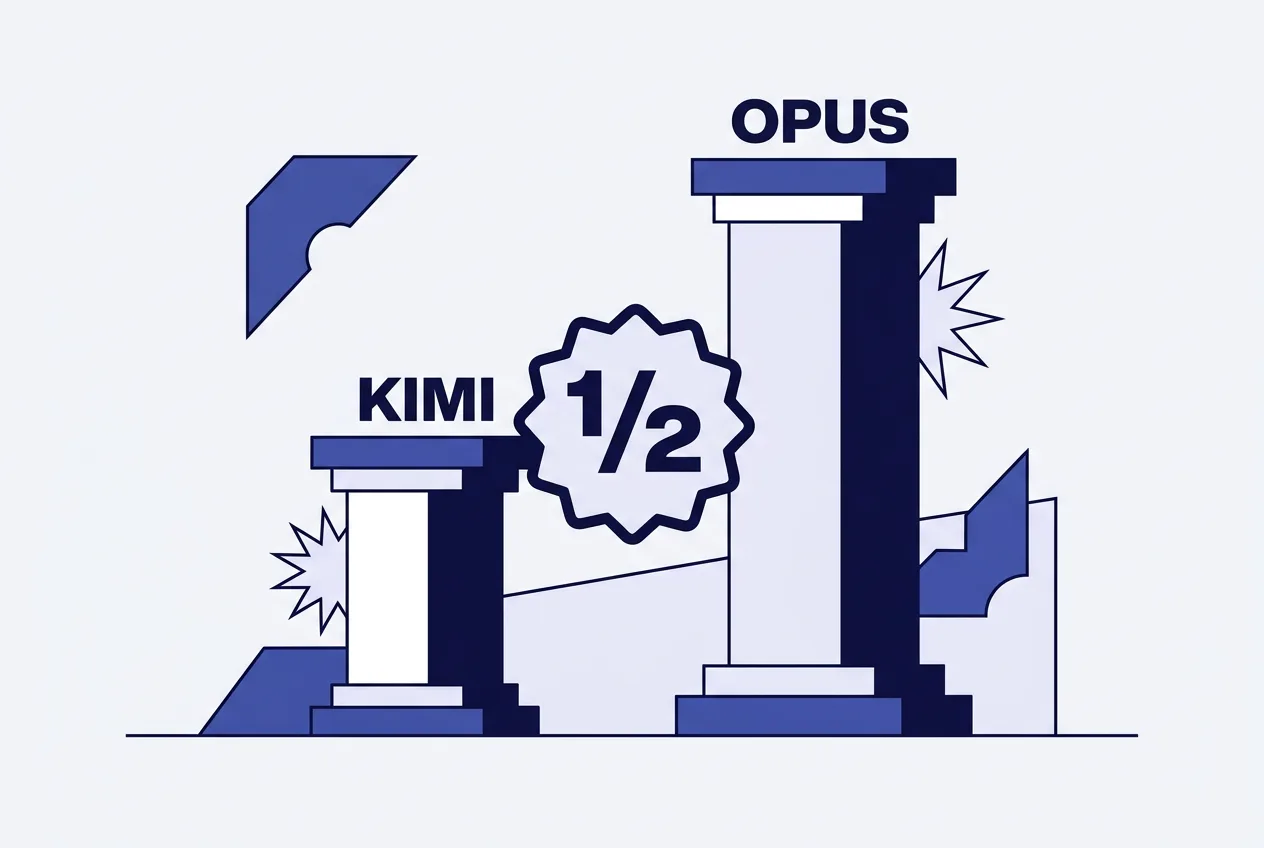
Performance stays close on coding and finance tasks yet shows gaps on deeper science reasoning in some vendor-reported tests. Hallucination rates dropped relative to the earlier K3 model. Full open weights are promised by November 4, 2026, after removal of certain cyber-related training data.
| Model | Input / Output ($/M) | Cached Input ($/M) | Context | Highspeed Option |
|---|---|---|---|---|
| Kimi K3.1 Pro | 2 / 10 | 0.20 | 1,048,576 | Yes, +100% |
| Claude Opus 5.5 | 4 / 20 | 0.20–0.30 | 1,000,000 | No |
Full open weights release will let developers test performance directly on internal workloads before committing to paid API usage. Organizations should monitor the official pricing page for any post-launch adjustments.
Frequently asked questions
What is the exact price of Kimi K3.1 Pro API calls?
Standard pricing is $2 per million input tokens and $10 per million output tokens. The highspeed variant doubles those rates except for cached input, which stays at $0.20 across both.
Does the 1M context window cost extra on Kimi K3.1 Pro?
No. Flat per-token pricing covers the full 1,048,576 tokens without tiers or surcharges. Cache write fees apply only when users explicitly enable caching.
When will Kimi K3.1 Pro weights become open?
Moonshot plans to release full open weights by November 4, 2026. The release will exclude certain cyber-related training data.
How does Kimi K3.1 Pro compare to Claude Opus 5.5 on cost?
Kimi K3.1 Pro lists at half the price of Claude Opus 5.5 for both input and output while matching the 1M context size. Performance remains close on coding benchmarks but shows differences on science tasks.
Comments 6