
Meta Muse Spark Open Review for Business Use Cases
Meta Muse Spark Open offers an 816B sparse MoE model with 1M context for agentic and coding tasks. This review examines real hardware requirements, benchmarks, and license constraints for business adoption.
Meta Muse Spark Open provides an 816B-total parameter sparse mixture-of-experts model with 42B active parameters per token. Released on October 15, 2026, it targets agentic workflows, long-context reasoning, and multimodal inputs for business teams that need open weights without full GPU clusters.
The model accepts text, image, video, and audio while producing text output. It supports a 1,048,576-token context window and runs on frameworks including vLLM, SGLang, and MLX across NVIDIA, AMD, Intel, and Apple silicon.
Meta Muse Spark Open Architecture and Hardware Requirements
The architecture uses 256 experts with eight active per token and includes a Perception Encoder for native multimodal handling. Training covered more than 100 languages, and Meta applied extra safety post-training to support standalone deployment. Recommended sampling settings are temperature 1.0 and top_p 1.0.
Weights are available in BF16 at approximately 1.65 TB and NVFP4 at 537 GB. NVFP4 inference fits on roughly four Blackwell GPUs or eight H200 cards. BF16 requires about 2 TB of VRAM. The model also runs on two linked Apple M5 Ultra Mac Studios with 512 GB unified memory each, using roughly 1 TB total via MLX.
Download options include Hugging Face repositories for both precision variants. Hosted endpoints exist on Amazon SageMaker AI, Google Cloud Model Garden, Microsoft Foundry Models, and inference providers such as Fireworks AI, Groq, Together AI, and OpenRouter.
Benchmarks, License Terms, and Business Limitations
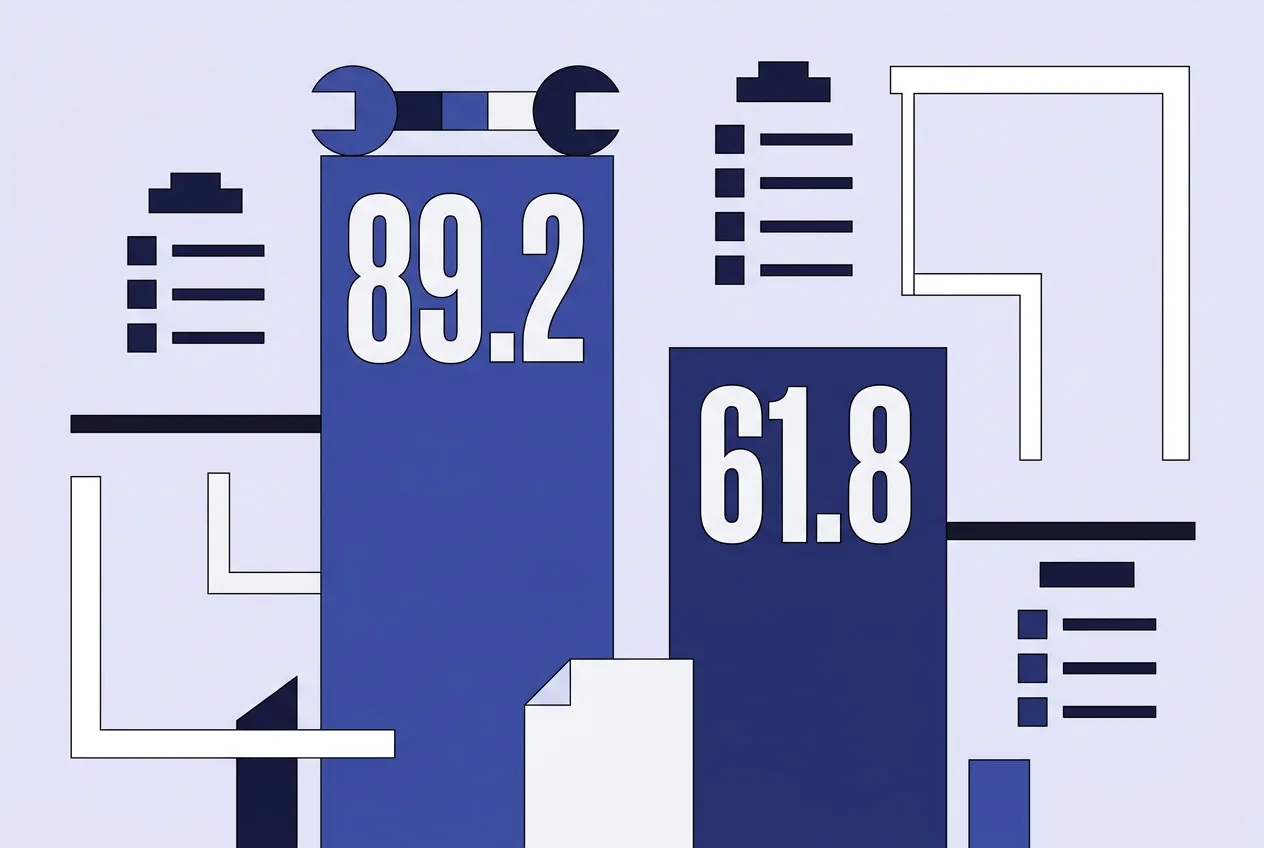
Meta reports leading scores on MCP-Atlas tool use at 89.2 and JobBench at 61.8 under high-reasoning settings. It trails Kimi K3, GLM 5.3, and Qwen3.8 on Terminal-Bench 2.1 at 76.4 and DeepSWE 1.1 at 60.0, with an AA Intelligence Index of 39. Independent large-scale evaluations remain limited at release.
The Muse Model License permits free internal, research, and most product use. API or service providers exceeding $20 million in annual gross revenue must notify Meta and execute a separate agreement. All deployments require prominent “Built with Muse Spark Open” attribution. Internal tools and non-API commercial features generally avoid these extra steps.
| Model | MCP-Atlas | Terminal-Bench 2.1 | JobBench | Hardware (NVFP4) |
|---|---|---|---|---|
| Meta Muse Spark Open | 89.2 | 76.4 | 61.8 | 4 Blackwell or 8 H200 |
| Kimi K3 | — | 82.1 | 58.4 | Cluster scale |
| GLM 5.3 | — | 80.5 | 59.7 | Cluster scale |
Business teams gain a U.S.-origin open-weight option suited to complex coding, multi-step agent tasks, and desktop-scale multimodal editing. The license suits startups and internal tools yet adds compliance steps for large-scale API offerings. Independent coding benchmarks should be run against Chinese open models before production rollout.
Frequently asked questions
What hardware runs Meta Muse Spark Open at NVFP4 precision?
Four Blackwell GPUs or eight H200 cards handle inference. The model also runs on two linked Apple M5 Ultra Mac Studios with roughly 1 TB unified memory total.
Does the Muse Model License restrict commercial API use?
Providers exceeding $20 million annual revenue must notify Meta and sign a separate agreement. Internal and non-API commercial features remain exempt from this requirement.
How does Meta Muse Spark Open compare on coding benchmarks?
It leads on MCP-Atlas and JobBench but trails Kimi K3, GLM 5.3, and Qwen3.8 on Terminal-Bench 2.1 and DeepSWE 1.1. Run independent tests for specific coding workloads.
What context length does the model support?
The context window reaches 1,048,576 tokens, enabling long-horizon agentic workflows and large document processing.
Comments 4