
Moov Money P2P Payments: How It Works, Limits, Fees and Bank Integration
Moov Money P2P payments let users send funds through existing bank apps using debit cards. This guide covers exact limits, fees, and integration requirements.
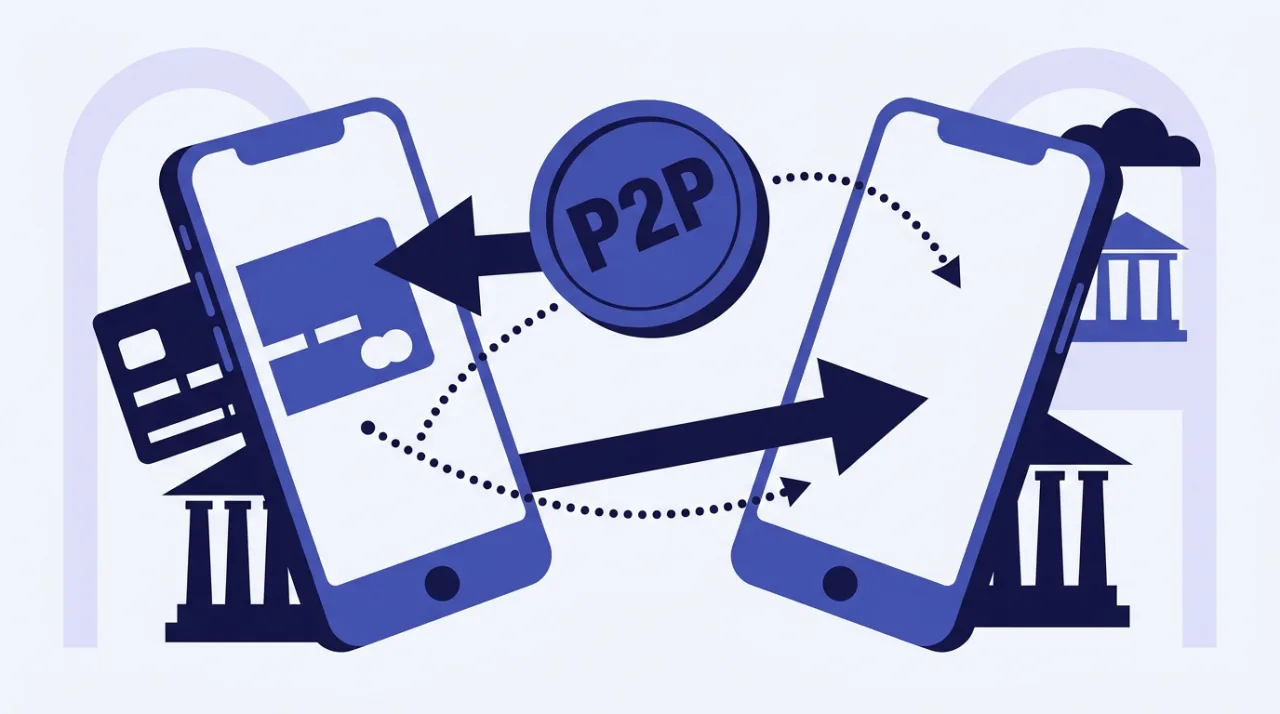
Moov Money P2P payments launched in September 2026 as a real-time solution that routes transfers through Visa Direct and Mastercard Move rails. Users initiate payments inside their bank app without needing a separate wallet or matching service on the recipient side.
The system maps phone numbers or Moov Tags to eligible debit cards behind the scenes. Funds reach the recipient’s linked deposit account, often within minutes.
How Moov Money P2P Payments Function Across Institutions
Senders start the transfer from a participating bank, credit union, or neobank app. They enter a phone number, contact, or Moov Tag, and the platform identifies the recipient’s debit card details automatically. Recipients confirm via their card issuer app or one-tap options such as Apple Pay or Google Pay.
No separate download is required for recipients who already hold an eligible U.S. debit card. Senders must belong to an institution that has integrated Moov’s SDK or UI library. The branded interface remains inside the sender’s primary banking app, preserving the customer relationship for that financial institution.
Security relies on passkeys, device intelligence, card verification, and real-time AI monitoring. Most transfers settle within minutes after the recipient claims the payment, though some receiving institutions may extend the window to three business days.
Moov Money operates only within the United States. It targets the gap left by closed networks by reaching any user with a standard debit card rather than requiring shared apps.
Limits, Fees, and Real-World Constraints
Consumer-level P2P limits are not published centrally and instead depend on each institution’s underwriting and verification rules. Platform documentation shows examples such as push-to-card transactions capped at $25,000 per transfer and velocity limits of $10,000 per transaction or $50,000 over 30 days per card fingerprint. ACH and RTP rails support higher caps that reach hundreds of thousands of dollars.

End-user fees are set by the sending institution, not by Moov. Platform pricing charged to financial institutions includes 0.95 percent of the transaction amount with a $0.50 minimum and $5 maximum for instant push-to-card or RTP credits. A $500 monthly minimum applies to standard Moov accounts.
| Payment Rail | Per-Transaction Example | 30-Day Velocity Example | Typical Settlement |
|---|---|---|---|
| Push-to-Card | $25,000 | $50,000 | Minutes to 3 days |
| RTP | Higher caps | Millions | Instant |
| ACH | Higher caps | Millions | 1–3 days |
Institutions using Jack Henry’s Banno platform already serve roughly 1,000 banks and credit unions. Integrators must evaluate their own risk policies before exposing higher limits to retail customers.
Bank Integration Steps and Business Considerations
Banks embed Moov Money through an SDK or pre-built UI components that keep the experience inside their own digital banking environment. The financial institution retains deposits and customer data while Moov handles network routing and compliance monitoring.
Practical rollout requires coordination with existing core processors and digital banking vendors. Institutions should test device binding flows and fraud rules with their current customer base before broad release.
Compared with Zelle, Moov Money removes the requirement that both parties use the same network. It also avoids directing funds into third-party wallets, keeping balances inside the primary deposit account. Brokerages and neobanks can add the feature without building separate P2P infrastructure.
Adoption depends on additional platform partnerships beyond the initial integrations already announced. Financial institutions evaluating the service should request current pricing sheets and sample limit matrices directly from Moov to align with their risk appetite.
Frequently asked questions
Which banks currently support Moov Money P2P payments?
Support is available through institutions using integrations such as Jack Henry’s Banno and direct SDK connections. Exact lists are not published publicly; contact Moov or your bank for current availability.
Are there daily or monthly limits on Moov Money transfers?
Limits vary by institution and are not fixed by Moov. Documented platform examples include $25,000 per push-to-card transaction and $50,000 over 30 days per card fingerprint.
Does Moov Money charge fees to individual users?
Moov does not publish consumer fees. Each participating bank or credit union sets its own pricing for customers, while Moov charges the institution platform fees such as 0.95 percent per instant transaction.
How long do Moov Money transfers usually take?
Most payments reach the recipient’s account within minutes after claim. Some receiving institutions extend settlement to a maximum of three business days depending on the payout method chosen.
Comments 4