
n8n vs Zapier vs Make: Developer-Focused API Integration Platforms Compared 2026
n8n stands out for developers seeking self-hosting and code extensibility, while Zapier offers the broadest app connections and Make balances visual complexity with pricing.
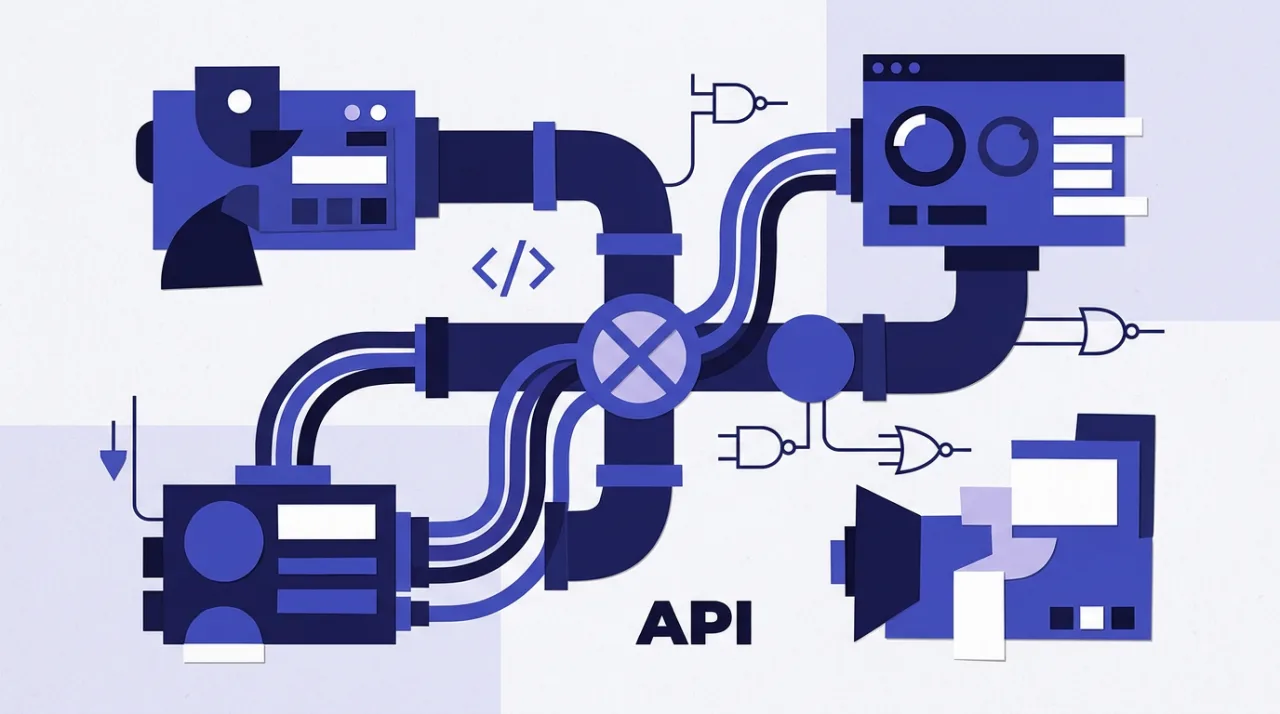
n8n provides the strongest option for developers who need control over data and costs at scale through self-hosting. Zapier suits teams prioritizing the largest number of app connections with minimal setup. Make offers a middle ground for visual workflows that require branching without writing code.
Each platform handles API integrations through visual builders and supports webhooks. Differences appear in deployment models, execution pricing, and extensibility with custom code.
Deployment Options and Data Control
n8n runs either self-hosted on Docker or Kubernetes under a fair-code license or through its managed cloud service. Self-hosted instances carry no execution limits and keep all data on infrastructure the developer controls. Make and Zapier operate exclusively as cloud SaaS platforms with data stored in US or EU regions.
Self-hosting n8n on a VPS typically costs between 5 and 20 dollars per month depending on the provider. This model appeals when compliance or latency requirements rule out third-party cloud storage. Zapier and Make require subscription payments regardless of volume and offer no on-premise alternative.
Enterprise features such as SSO appear only on higher paid tiers across all three services. n8n version 3.0, expected around October 2026, will introduce further self-hosted adjustments.
Pricing Models and Execution Costs
n8n charges per completed workflow execution regardless of step count. Make bills by credits consumed per module operation, where polling triggers often add to usage. Zapier counts successful action steps as tasks while treating triggers and formatters as free in most cases.
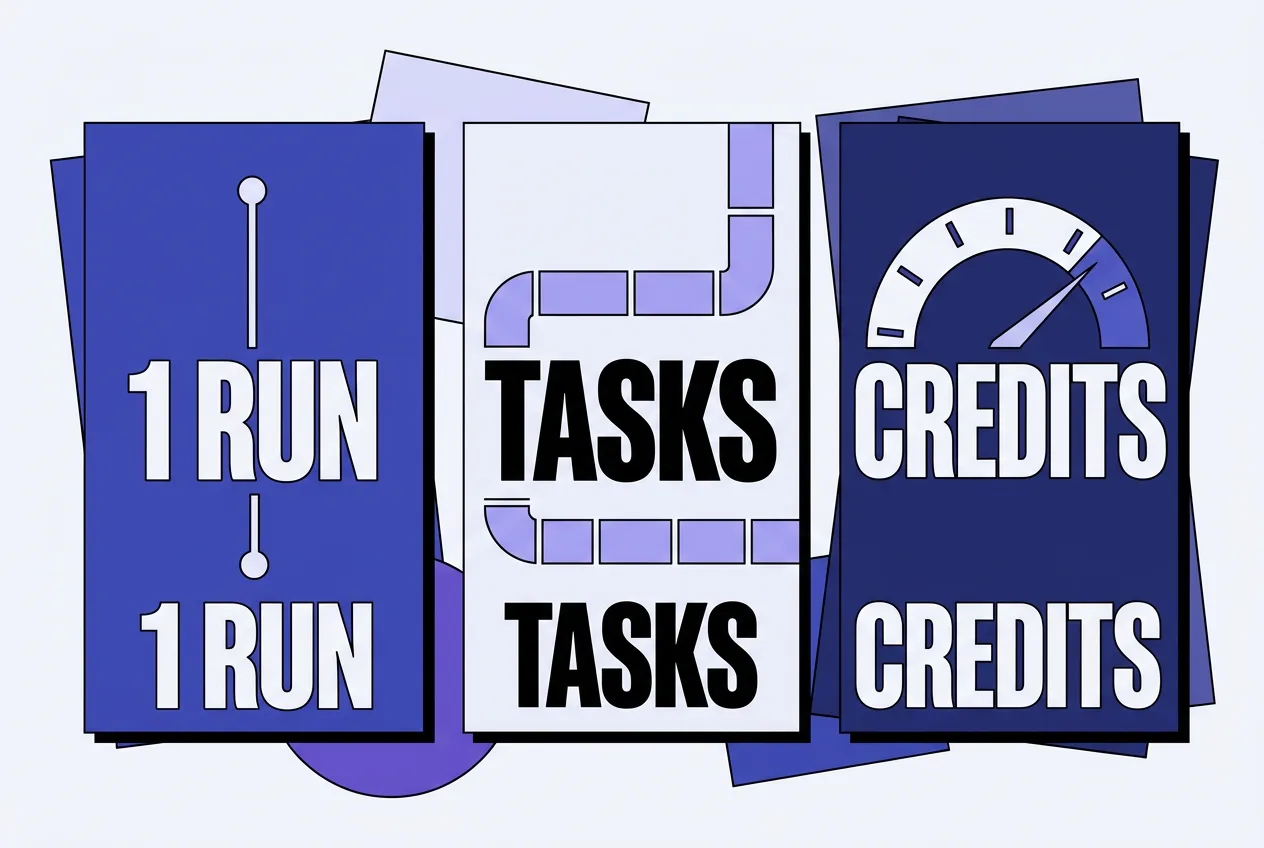
| Platform | Free Tier | Entry Paid (Annual) | Billing Unit |
|---|---|---|---|
| n8n | Self-hosted unlimited | Cloud Starter ~€20/mo (2,500 executions) | Workflow executions |
| Make | 1,000 credits/mo | Core ~$9–12/mo (10,000 credits) | Credits per operation |
| Zapier | 100 tasks/mo | Professional $19.99/mo (750 tasks) | Tasks (actions) |
At high volumes n8n frequently becomes the lowest-cost choice because its pricing does not multiply with workflow length. Developers running thousands of daily executions can keep costs predictable with self-hosted n8n while Zapier or Make charges grow linearly with operations.
AI features on all platforms add separate token or unit costs. n8n includes advanced LangChain nodes for custom agents, Make provides an in-canvas reasoning panel, and Zapier offers AI steps billed per activity in certain plans.
Integrations, Extensibility and Typical Use Cases
Zapier connects to more than 9,000 applications, the widest selection among the three. Make supports roughly 3,000 to 3,500 apps with strong visual tools such as routers and iterators. n8n offers 400 to 700 native nodes but allows expansion through HTTP requests, JavaScript or Python code nodes, and custom node development.
Developers who need to embed business logic or call internal APIs directly favor n8n. Non-technical users who require quick connections to niche SaaS tools usually start with Zapier. Make serves agencies that build complex branching scenarios without writing code.
Common developer workflows include syncing internal databases to external CRMs, routing support tickets through custom validation logic, and orchestrating multi-step AI agent sequences. n8n self-hosted instances handle these patterns at high frequency without per-step fees. Make visual builders reduce maintenance time for moderate complexity. Zapier reduces initial setup time when the required app already exists in its directory.
Teams should test a representative workflow on each platform before committing, because execution volume, data sensitivity, and required app coverage determine the actual cost and effort.
Frequently asked questions
Which platform costs least at high execution volumes?
n8n often records the lowest cost once daily executions exceed several thousand because it charges per workflow run rather than per step or credit.
Can n8n replace Zapier for non-technical teams?
No. Zapier maintains the largest app directory and simplest interface, making it faster for users who avoid code entirely.
Does Make support custom code?
Make focuses on visual modules and offers limited JavaScript functions inside certain operations, whereas n8n provides full JS and Python nodes.
What happens to data when using self-hosted n8n?
All workflow data remains on the developer-controlled server or VPS, meeting stricter sovereignty or latency requirements than cloud-only options.
Comments 12