
Binance Wallet DeFi API Expands to 10 EVM Chains with Transaction Building Tools
Binance Wallet DeFi API launched support for 10 EVM chains on October 16, 2026, offering REST endpoints for DeFi positions, protocol data and unsigned transaction calldata across multiple protocols.
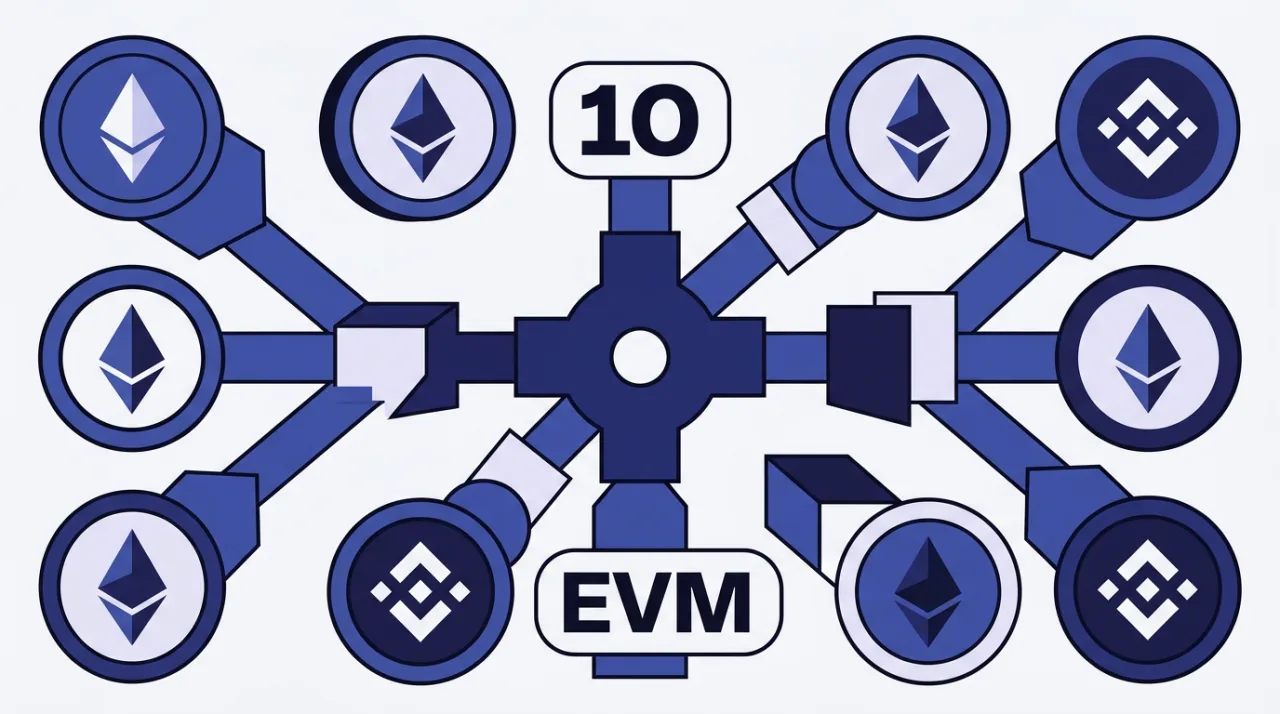
Binance Wallet DeFi API now supports ten EVM chains and provides REST endpoints for position queries, protocol details and unsigned transaction construction. Developers can retrieve multi-address data, build deposit or liquidity operations, and receive ordered calldata for wallet signing without exposing private keys. The update, documented on October 15, 2026, moves beyond the prior BSC-only scope.
Binance Wallet DeFi API Supported Chains and Core Features
The service covers BNB Smart Chain, Ethereum, Base, Arbitrum One, Polygon, Optimism, Avalanche C-Chain, Robinhood, Katana and ARC. All endpoints use chain IDs listed in the official supported-chains documentation. Position and investment queries return APY figures, token allocations and pool data with pagination and security-score filters. Transaction endpoints generate calldata for deposit, redeem, LP add, LP remove and claim actions, including optional simulate=true previews that show balance changes and estimated gas.
Integration follows a fixed sequence: discover protocols, build the operation, simulate effects, sign the returned calldata in a wallet, broadcast via the Transaction API and poll status. The API supplies unsigned calldata only; the developer wallet performs signing and broadcast. Protocol coverage includes Aave V3 and V4, Morpho, Spark, Fluid, Ethena, Venus, Lista DAO, Renzo and liquidity venues such as Uniswap and PancakeSwap. Position queries extend to a wider set of protocols than transaction building. Solana support remains listed as coming soon.
Rate limits operate on independent dimensions: 1200 requests per 60 seconds per IP, 1200 per API key and 6000 per user. Individual endpoints default to five requests per second. Exceeding any limit returns HTTP 429 with a Retry-After header. Authentication requires an API key signed with HMAC-SHA256 or Ed25519 and capability-domain permissions set to DeFi. Some protocols return redeem waiting periods inside build responses; LP operations carry an approximate twenty-minute server-side timeout on generated calldata.
Security Controls, Compliance and Comparison with Other APIs
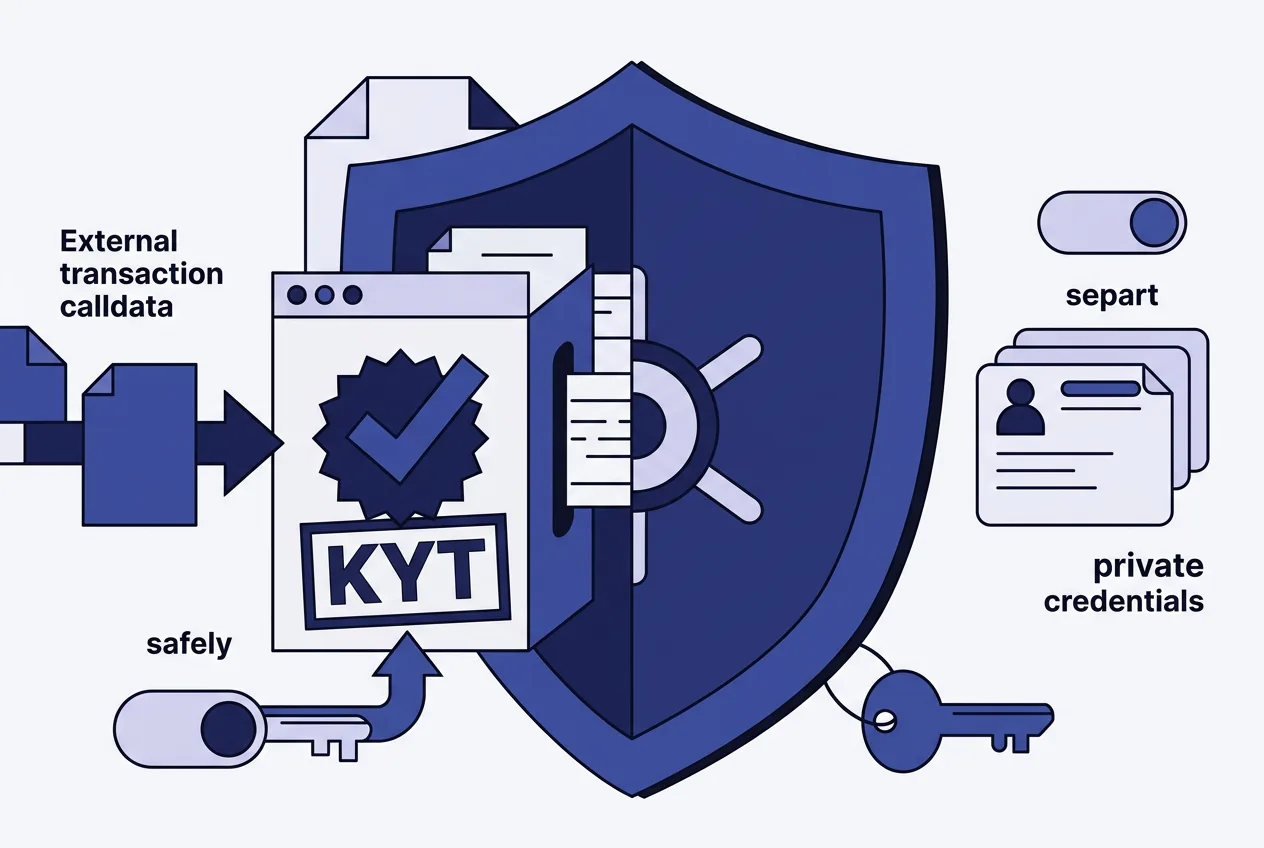
The API never stores private keys. All transaction outputs consist of unsigned calldata that the developer wallet signs locally. Authentication includes timestamp and nonce checks to prevent replay. KYT screening runs on every build request for ENTER and EXIT flows and blocks addresses or flows flagged as high-risk or sanctioned. Additional compliance layers detect sanctioned regions and VPN or proxy usage. Protocol detail responses include security scores, team information and FAQ sections supplied by the source protocol.
Developers comparing options can evaluate the following characteristics:
| API | Chains | Transaction Building | Rate Limit (per key) | Key Limitation |
|---|---|---|---|---|
| Binance Wallet DeFi API | 10 EVM | Deposit, redeem, LP, claim | 1200 / 60 s | LP calldata timeout ~20 min |
| CoinStats Wallet API | 120+ | Balances and positions only | Published per plan | No unsigned calldata |
| Moralis | Multi-chain | Custom via webhooks | Plan dependent | Requires additional integration work |
Teams needing only TVL and yield data can use DeFiLlama endpoints without authentication. Projects requiring swap routing may combine the Binance API with 1inch for execution while keeping position monitoring inside one service. No public audit reports or disclosed vulnerabilities appear in coverage of the October 2026 launch. Developers should check the Supported Chains & Protocols page for additions, as the service continues to expand coverage.
Frequently asked questions
Which chains does the Binance Wallet DeFi API currently support?
Ten EVM chains: BNB Smart Chain, Ethereum, Base, Arbitrum One, Polygon, Optimism, Avalanche C-Chain, Robinhood, Katana and ARC. Solana support is listed as coming soon.
What rate limits apply to the Binance Wallet DeFi API?
Limits are 1200 requests per 60 seconds per IP and per API key, 6000 per user, and a default five requests per second per endpoint. HTTP 429 responses include Retry-After headers.
Does the API handle private keys or transaction signing?
No. The service returns only unsigned calldata. The developer wallet performs signing and broadcast after KYT screening on build requests.
How does Binance Wallet DeFi API compare with CoinStats or Moralis?
Binance provides unsigned transaction building across ten chains while CoinStats focuses on broad position data. Moralis requires more custom work for similar calldata generation.
Comments 7