
Google Gemini API Pricing 2026: Gemini 4 Argon Model Details and n8n Integration
Gemini 4 Argon launched on October 13, 2026 with 1M-token context and specific pricing tiers through Google AI Studio and Vertex AI. Here is how the rates compare and how it connects to n8n.
Google Gemini API pricing 2026 for the new Gemini 4 Argon model starts at $2 per million input tokens and $10 per million output tokens through November 30. Rates double after December 1, 2026. The model reached general availability on October 13, 2026 and supports direct use inside n8n nodes and agents.
Business users need clear numbers on cost, output quality, and workflow setup before committing to any frontier model. This guide lays out the exact rates, benchmark scores, and n8n integration steps based on current data.
Google Gemini API Pricing 2026 by Tier
Standard tier pricing applies to most API calls through Google AI Studio and Vertex AI. The introductory window ends November 30, 2026, after which input and output rates double. Cached input stays at 95 percent discount across all tiers. Batch and Flex options start lower at $1 input and $5 output during the intro period. Priority tier costs more at $3.60 input and $18 output initially.
EU Vertex AI users pay an additional 10 percent surcharge. Thinking tokens count as output tokens. No free tier exists for this model. Developers running high-volume agents should calculate both the December price jump and the cost of cached versus uncached calls.
| Tier | Intro Input (per 1M) | Intro Output (per 1M) | Post-Dec 1 Input | Post-Dec 1 Output |
|---|---|---|---|---|
| Standard | $2 | $10 | $4 | $20 |
| Batch/Flex | $1 | $5 | $2 | $10 |
| Priority | $3.60 | $18 | $7.20 | $36 |
Claude Fable 5.1 and GPT-6 Astra maintain different published rates, so teams comparing long-context agents should run side-by-side token counts on sample workflows before switching providers.
Performance Benchmarks and Practical Limits
Gemini 4 Argon reports leading or tied scores on 13 of 19 public benchmarks against GPT-6 Astra, Claude Fable 5.1, and Opus 5.5. Notable results include 68.9 percent on Vals Index, 77.9 percent on DeepSWE v1.1, and 84.2 percent on GraphWalks at 256K–1M context. It reaches 88.8 percent on LABBench for science tasks and shows low hallucination rates in agent evaluations.
The model trails on certain coding and math suites: 55.0 percent on FrontierSWE v2 and 57.4 percent on Terminal-Bench 4.0. Its unified 1M-token context and output window supports long-horizon finance, legal, and cybersecurity agents. Multimodal input covers text, image, audio, and video with text output only.
Independent Artificial Analysis Intelligence Index places it near 52.6–53 under high-reasoning settings, just behind select Claude variants. These scores guide decisions on whether to route math-heavy subtasks to another model while keeping Gemini 4 Argon for long-context research work.
Connecting Gemini 4 Argon to n8n Workflows
n8n added Gemini 4 Argon support on launch day through its native Google Gemini node and Chat Model node. Users enter their own API key or use n8n Cloud Gateway credits. AI Agents inside n8n can call tools, sub-workflows, and memory stores with the model’s tool-calling interface.
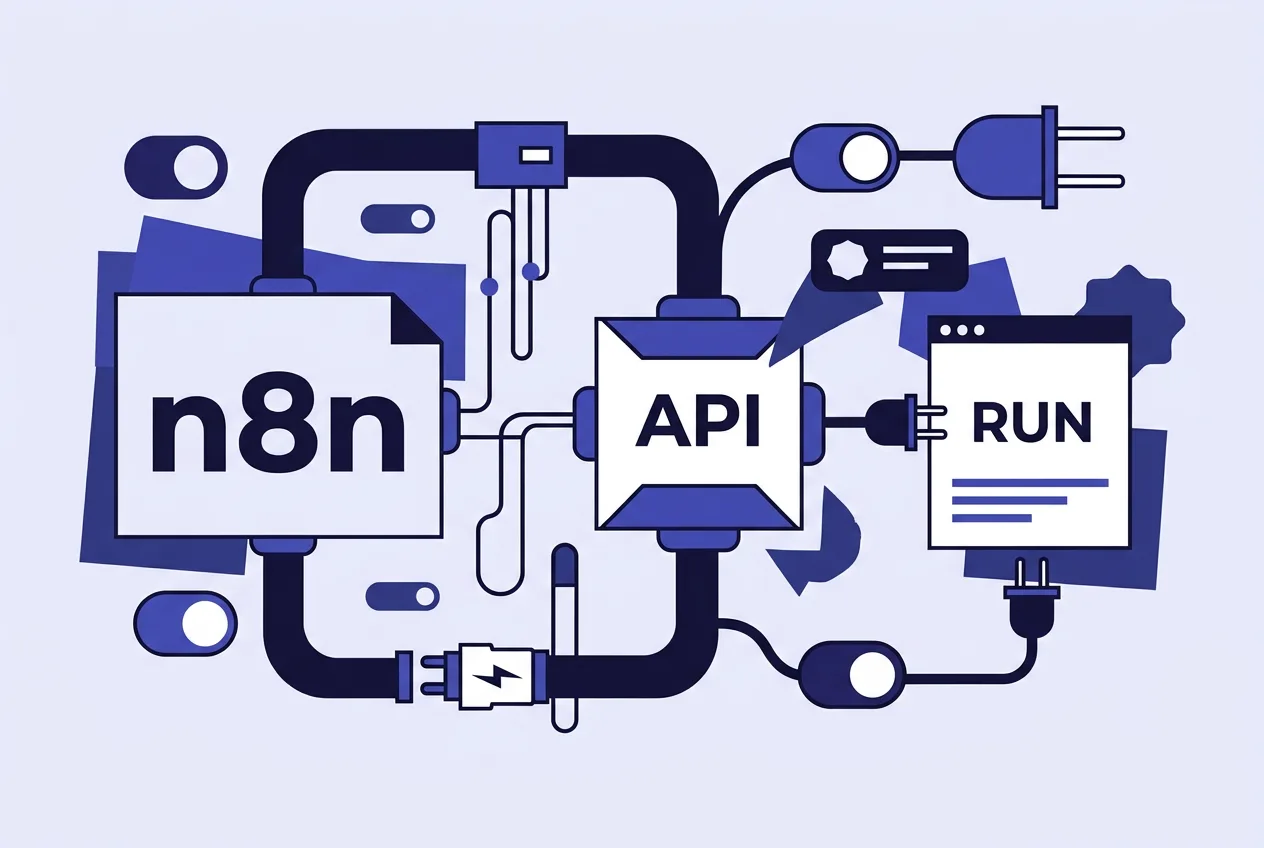
The n8n Assistant accepts natural-language prompts to generate or debug workflows via an OpenAI-compatible endpoint or OpenRouter. For external AI tools and IDEs, the Model Context Protocol server lets users describe a workflow in plain text and receive a ready n8n JSON definition. Instance-level MCP configuration is required.
Teams already running n8n can test the model on existing webhook-to-CRM or data-enrichment flows before committing to higher December rates. Monitor token usage logs inside n8n to forecast the impact of the scheduled price change.
Frequently asked questions
When does Google Gemini API pricing 2026 double for Gemini 4 Argon?
Standard rates move from $2 input and $10 output to $4 and $20 on December 1, 2026. Batch and priority tiers follow the same doubling schedule.
How does Gemini 4 Argon compare on long-context tasks versus Claude models?
It leads or ties on 13 of 19 benchmarks and handles 1M-token unified context and output. It trails on some coding benchmarks where certain Claude variants score higher.
Can n8n use Gemini 4 Argon without an external API key?
Yes, n8n Cloud Gateway credits work directly in the Google Gemini node. Self-hosted instances require a personal key from Google AI Studio or Vertex AI.
Does the Model Context Protocol in n8n require extra setup?
Yes, instance-level MCP server configuration is needed before external tools can generate n8n workflows from natural language prompts.
Comments 1