
Crossmint Agent Commerce Toolkit Review 2026: AI Agent Payments Features and Limits
Crossmint Agent Commerce Toolkit lets AI agents save cards, request scoped budgets and complete purchases via one API. Review covers features, fees, limits and integration realities.
Crossmint Agent Commerce Toolkit, launched October 8 2026, gives AI agents a single API to store user payment credentials, request scoped budgets and complete purchases across any browser-accessible merchant site. It combines Agent Cards, Agent Checkouts and Agent Wallets to bridge existing card rails and stablecoin networks without requiring new protocols or merchant onboarding.
Core Features and Integration Path
Developers integrate via the Crossmint SDK and documentation. AI coding tools such as Claude Code or Cursor can generate working code from the docs in a single prompt. Sandbox test cards are provided, and the first 1,000 checkouts per month fall under the free tier in current documentation. The toolkit supports custom apps, messaging platforms including iMessage and WhatsApp, and MCP hosts such as Claude, ChatGPT or Cursor.
Agent Cards let users save any Visa or Mastercard once inside the host application. Agents then request budgets that specify amount, expiry, optional merchant lock and store. Approval happens at the user level, after which network-level enforcement applies where Visa Intelligent Commerce or Mastercard Agent Pay programs are active. Raw card data never reaches developer servers.
Agent Checkouts handle cart creation, subscription setup and one-time purchases through embedded flows when available or optimized browser automation as fallback. Agent Wallets add non-custodial stablecoin options including USDC and USDT for x402 or on-chain micropayments. An open-source reference app is available on GitHub for testing.
- Global card support with PCI-compliant vault
- Scoped budgets revocable by users
- Stablecoin rails for API micropayments
- Login credential encryption per store
- Over one billion items accessible without merchant setup
Pricing, Limits and Comparison
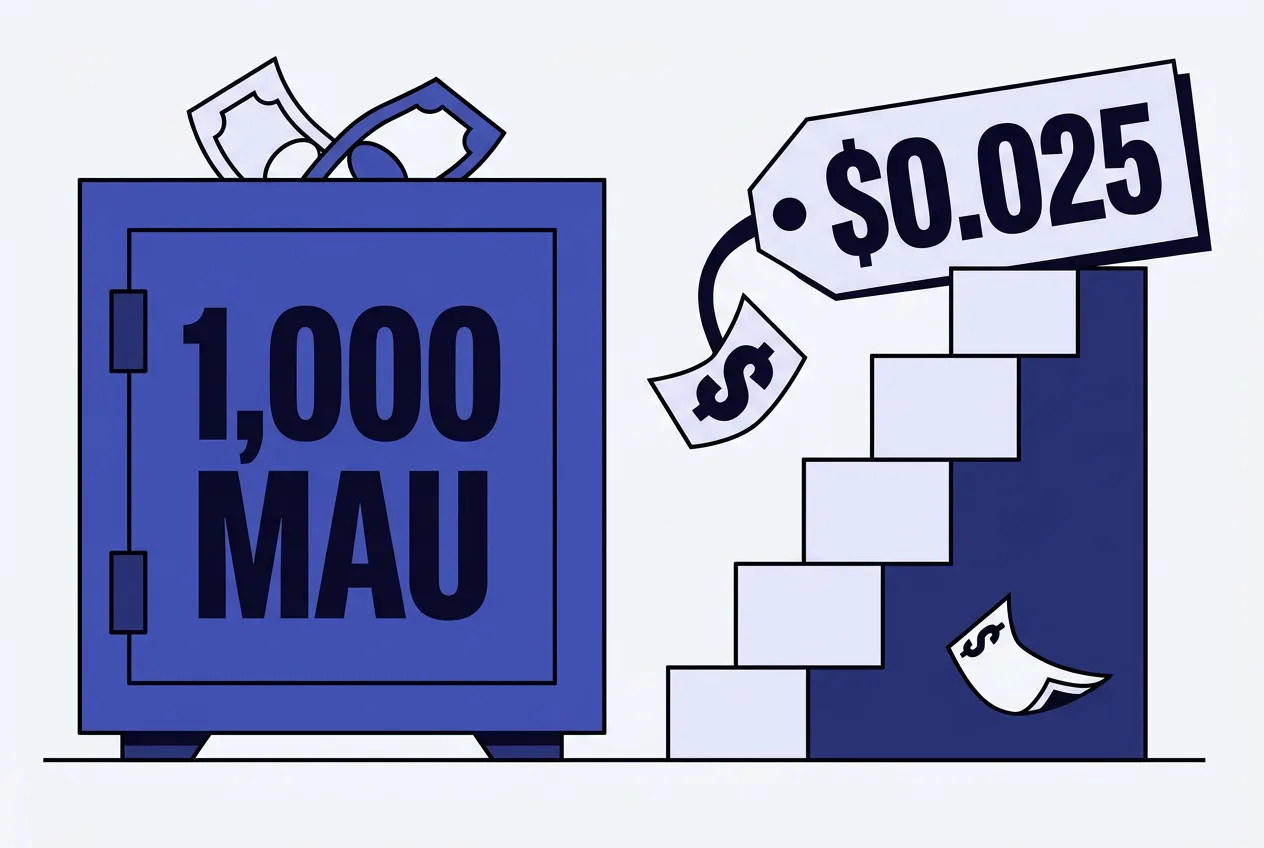
Wallets remain free up to 1,000 monthly active wallets, after which overage charges reach approximately $0.025 per additional MAU. Transaction fees for checkout and orchestration follow volume-based schedules that are not fully published for the agent toolkit; enterprise pricing requires direct sales contact. No hard published caps exist beyond the free tier, yet browser automation fallback can incur high token costs on complex sites.
The table below compares key elements with two other agent-payment approaches that have appeared in recent coverage.
| Feature | Crossmint Toolkit | Peer Payouts | Moreta Wallet |
|---|---|---|---|
| Card vault + scoped tokens | Yes (Visa/Mastercard programs) | No | Limited |
| Stablecoin support | USDC, USDT, others on request | Stablecoin cash-out focus | P2P transfers |
| Browser checkout fallback | Yes, with login handling | No | QR-focused |
| Free tier checkouts | 1,000/month | Volume discounts only | Transaction caps apply |
Users retain credit-card rewards and points because limits are enforced at the network level rather than through custom virtual cards in every case. Merchants of record manage receipts and returns. Browser automation remains the weakest point: CAPTCHAs and bot detection can still interrupt flows, and no public aggregate success-rate data across merchants exists yet.
Limitations and Developer Considerations
The toolkit does not validate purchase intent beyond the approved spend ceiling. Reviewers recommend adding separate decision layers for agent logic. Liability for erroneous purchases remains unsettled, with merchants often bearing risk as merchant of record. Pricing transparency for high-volume agent usage is still incomplete in public sources.
Setup works best when teams test the sandbox thoroughly and monitor fallback paths for the first merchant categories they target. Ongoing merchant and protocol additions are expected, yet no fixed roadmap dates have been released. Developers should verify current fee schedules directly with Crossmint before scaling beyond the free tier.
Frequently asked questions
How many checkouts are free with Crossmint Agent Commerce Toolkit?
The first 1,000 checkouts per month are included under the current free tier. Additional volume triggers per-transaction fees that require direct confirmation from Crossmint sales.
Does Crossmint Agent Commerce Toolkit support stablecoin payments?
Yes. Agent Wallets handle USDC and USDT for x402 and on-chain micropayments, with additional stablecoins available on request.
What happens if browser automation fails during checkout?
The system falls back to optimized browser automation. Login credentials are encrypted per store, yet CAPTCHAs and bot checks can still interrupt flows and increase token costs.
Can users keep credit-card rewards when agents spend?
Rewards and points remain intact because limits are enforced at the card network level rather than through separate virtual cards in every transaction.
Comments 6