
Stripe Metronome Acquisition 2026 Strengthens AI Metered Billing Capabilities
The Stripe Metronome acquisition completed in January 2026 adds real-time metering and hybrid pricing tools to Stripe Billing for high-volume AI companies.

Stripe completed its acquisition of Metronome in mid-January 2026 after an announcement on December 2, 2025. The move adds advanced usage-based billing tools aimed at AI and infrastructure firms that process millions of events per second. Customers such as OpenAI, Anthropic, and NVIDIA already rely on Metronome’s metering engine.
Stripe Metronome Acquisition 2026 Timeline and Business Context
Metronome was founded in San Francisco around 2019 by ex-Dropbox engineers and raised approximately $128 million before the deal. The reported transaction value reached about $1 billion, well above its prior $470 million valuation. Stripe cited the need for flexible monetization as AI companies shift from flat subscriptions to token, GPU-second, and API-call pricing models.
Patrick Collison noted that usage-based models will define the next decade, while Metronome CEO Scott Woody stated the combined platform will serve both startups and global enterprises. Integration work focuses on embedding Metronome’s real-time metering into Stripe Billing while preserving the option to use it standalone. The acquisition follows similar consolidation moves, including Adyen’s purchase of Orb earlier in 2026.
Metronome now appears under the “Powered by Metronome” label. Basic usage routes through the Stripe Meters API, which includes up to 100 million events per month in standard Billing plans. Higher volumes or complex contracts move to the dedicated Metronome engine.
AI Metered Billing Features, Pricing, and Integration Limits
Post-acquisition features include real-time metering and alerting, SQL-defined billable metrics, multidimensional pricing, credits, commits, ramp schedules, and embeddable dashboards. The system supports usage-based, seat-based, subscription, hybrid, credit-based, and prepaid models. It also handles enterprise minimums and cloud marketplace integrations.
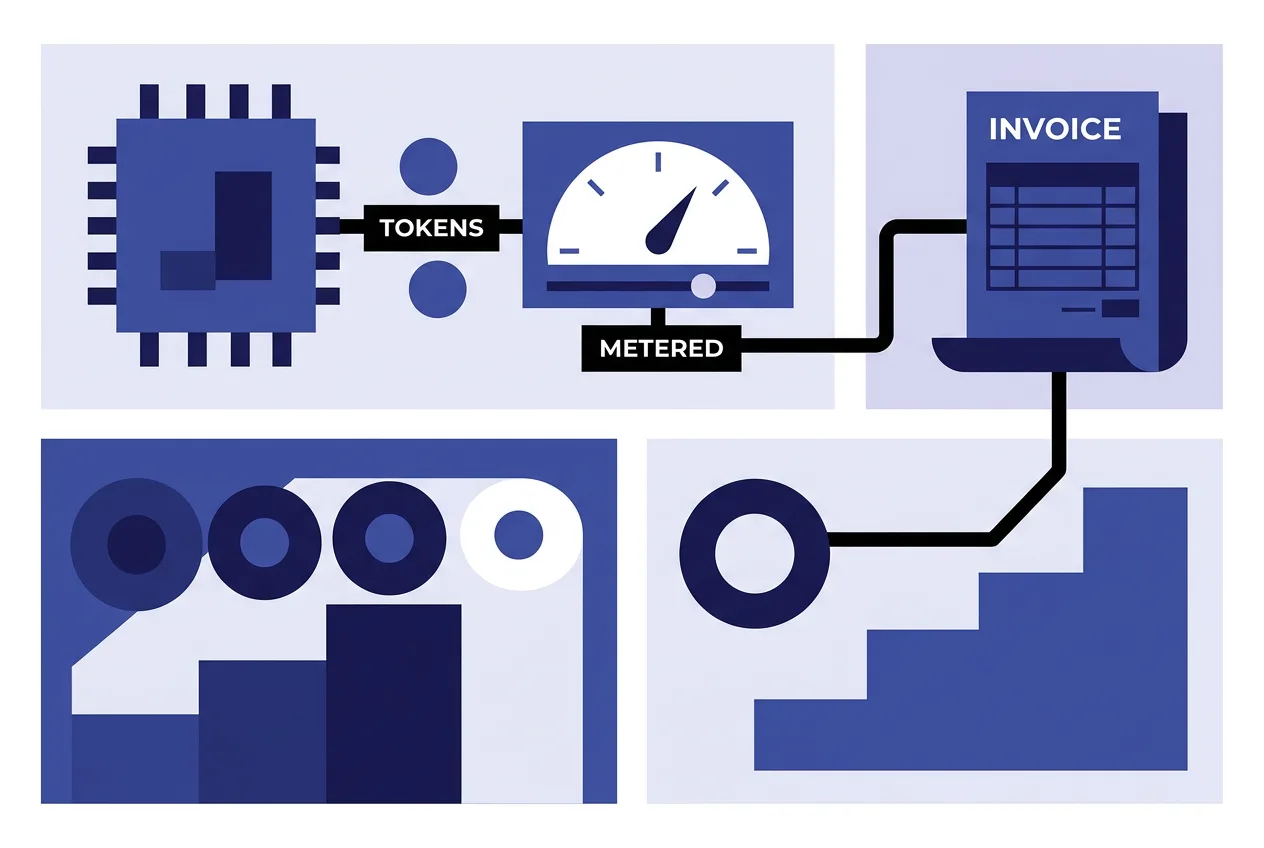
Starter pricing sits at 0.8 percent of billing volume plus $0.04 per 1,000 ingest events. No free allotment is published. Custom plans add Salesforce, NetSuite, data warehouse exports, and dedicated support; pricing requires direct sales contact and depends on volume. Stripe Billing itself charges 0.7 percent on a pay-as-you-go basis or starts near $620 per month on annual tiers, with separate card processing fees applying in all cases.
Current limits include separate paths for low-volume and high-volume workloads. Companies needing processor independence or self-hosting must evaluate other options. A typical migration path involves mapping existing rate cards and contracts into the new SQL metrics layer before switching traffic to the Metronome engine.
- Map current usage events to SQL-defined metrics first.
- Test rate cards and credit drawdowns on a sandbox account.
- Route high-scale traffic to the dedicated Metronome path once volume exceeds 100 million events monthly.
Alternatives for AI App Billing Platforms in 2026
Companies evaluating options beyond the combined Stripe and Metronome stack can compare several established platforms. Choice depends on volume, need for open-source deployment, and preference for a single payments provider.
| Platform | Key Strength | Deployment | Best For |
|---|---|---|---|
| Orb (Adyen) | SQL metrics and simulations | Cloud | High-volume usage tracking |
| Lago | Flexible AGPLv3 licensing | Self-host or cloud | Teams wanting processor independence |
| Stigg | Real-time entitlements | Cloud | PLG credit and feature gating |
Orb emphasizes simulation tools for complex pricing experiments. Lago allows full self-hosting under AGPLv3 terms and remains agnostic to the downstream payment processor. Stigg focuses on entitlements and credit management rather than raw metering scale. Each alternative requires separate evaluation of contract minimums and data export capabilities before migration.
Frequently asked questions
When did Stripe complete the Metronome acquisition?
The deal was announced December 2, 2025 and closed around January 13-14, 2026. Metronome now operates as a Stripe product line.
What pricing applies to Metronome after the acquisition?
Starter pricing starts at 0.8 percent of billing volume plus $0.04 per 1,000 events. Custom plans with additional integrations require sales contact and depend on contract volume.
Which companies used Metronome before the deal?
OpenAI, Anthropic, NVIDIA, Databricks, Confluent, and Anyscale ran production workloads on the platform. It handled millions of usage events per second at peak.
How does the 100 million event limit affect users?
The Stripe Meters API includes 100 million events monthly. Volumes above that threshold route to the dedicated Metronome engine with separate pricing.
Comments 6