
Moov Money P2P Payments 2026: Bank Integration Limits, Fees, Visa Mastercard Rails and Comparison with Klarna P2P
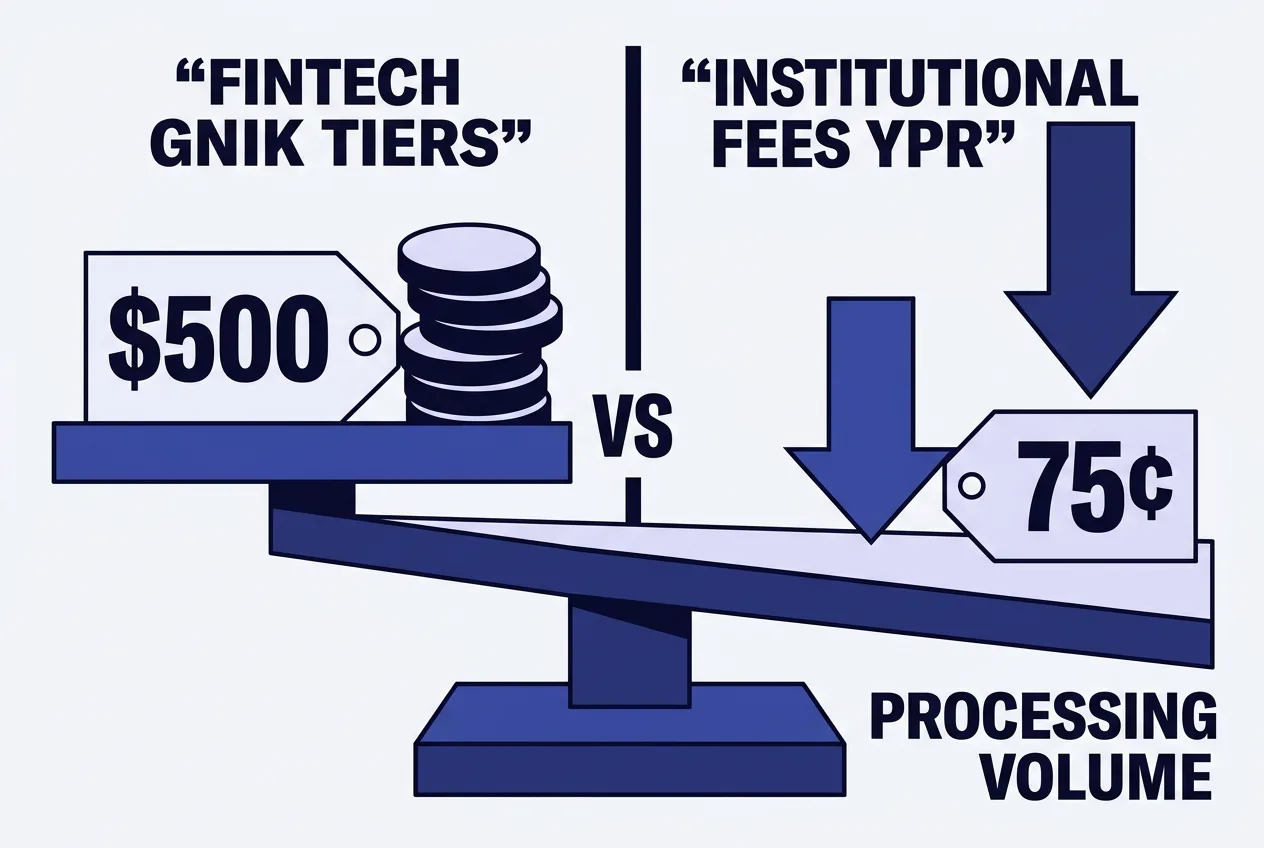
Moov Money P2P enables real-time transfers to existing debit cards through bank apps. Institutions pay a $500 monthly minimum plus per-transaction fees starting near 75¢.
Moov Money P2P launched in September 2026 as an embedded solution from Moov Financial in Denver. It lets U.S. banks and credit unions offer real-time sends and receives inside their own apps using existing Visa or Mastercard debit cards. Recipients need no new account; funds reach the account linked to the recipient's phone number or card credential.
The service targets smaller institutions outside the Zelle network. Initial reach covers roughly 1,000 banks through the Jack Henry Banno platform, with direct SDK integration available for others.
Bank Integration and Visa Mastercard Rails
Moov Money P2P runs on Visa Direct and Mastercard Move rails for near-real-time domestic transfers. Most payments complete in minutes, though some recipient institutions may hold funds up to three business days. Identity checks include phone verification, card validation, passkeys, and AI fraud monitoring. Tokenized payments work with Apple Pay and Google Pay.
Deployment takes about one week via Banno or the Moov SDK and UI library. Participating institutions must enroll senders; recipients only need an eligible U.S. debit card. Network velocity examples allow up to $25,000 per transaction, with daily and monthly caps set by each financial institution.
Actual consumer limits vary by bank policy and verification level. The service stays domestic at launch, with no cross-border support confirmed for 2026.
Fees, Limits and Moov vs Klarna P2P
Institutions face a $500 monthly minimum fee that does not roll over. Per-transaction pricing starts near 75 cents and decreases with volume. End-user fees on similar Jack Henry push-to-card transfers reach 1.75 percent or a 50-cent minimum. Pull-from-card transfers carry 0.75 percent or 50 cents minimum. No setup fees apply, though custom pricing exists.
Moov reaches an estimated 90.5 percent of U.S. consumers through debit cards, according to Federal Reserve Atlanta 2025 data. This exceeds single-app P2P networks that top out near 34.6 percent coverage.
| Feature | Moov Money P2P | Klarna P2P |
|---|---|---|
| Launch date | September 2026 | January 2026 |
| Geography | U.S. only | 13 European countries |
| Rails | Visa Direct, Mastercard Move | Klarna app network |
| Recipient requirement | Eligible debit card | Klarna account or phone/email |
| Bank embedding | Yes, via Banno or SDK | App-centric only |
| Monthly minimum | $500 for institutions | Not disclosed |
Typical use cases include banks adding P2P inside existing mobile apps without directing users to third-party services. Institutions retain branding and customer relationships while Moov handles infrastructure and fraud tools. Early adopters note faster deployment than building custom solutions, though exact transaction caps still depend on each bank's risk settings.
Frequently asked questions
How long do Moov Money P2P transfers take?
Most transfers complete in minutes on Visa Direct or Mastercard Move rails. Some recipient institutions may place holds of up to three business days.
What are the fees for Moov Money P2P?
Institutions pay a $500 monthly minimum plus per-transaction fees beginning around 75 cents. End-user fees on related services reach 1.75 percent or a 50-cent minimum.
Does Moov Money P2P work outside the United States?
The service launched as domestic U.S. only. No cross-border expansion timeline has been confirmed.
How does Moov Money P2P differ from Klarna P2P?
Moov operates inside U.S. bank apps using debit card rails and reaches most consumers without new accounts. Klarna focuses on its app in 13 European countries with account-based transfers.
Comments 6