
Muse Spark Open Meta: Benchmarks, Hardware Needs and API Costs for 816B Model
Muse Spark Open Meta offers an 816B open-weight model with strong agentic scores. Review covers benchmarks, local run requirements, hosted pricing and developer applications.
Muse Spark Open Meta launched on October 15, 2026 as an 816B-total parameter sparse mixture-of-experts model with 42B active parameters. It accepts text, image, audio and video inputs while producing text output and supports a 1M-token context window. The model targets coding, long-horizon agentic workflows, tool use and multi-step reasoning.
Meta trained the model on more than 100 languages and released it under the Muse Model License. Weights are available in BF16 at roughly 1.65 TB and in NVFP4 at roughly 537 GB. The license permits free download, fine-tuning and redistribution with attribution while restricting certain high-risk applications.
Muse Spark Open Meta benchmarks and developer applications
Meta reported the following scores at launch on its internal xhigh reasoning setting. On MCP-Atlas tool-use benchmark the model reached 89.2. JobBench produced 61.8. HLE-Diamond without tools scored 26.1. Terminal-Bench 2.1 reached 76.4, below Kimi K3 at 85.0. DeepSWE 1.1 reached 60. The Artificial Analysis Intelligence Index placed it at 39, behind GLM 5.3 at 45.
These results show strength in tool-calling and multi-agent orchestration but place the model in the middle of the pack on pure coding tasks. Typical applications include building developer agents that edit large codebases, orchestrating multi-step software engineering pipelines, reviewing hour-long video content and handling multimodal inputs such as screenshots paired with audio instructions.
Teams have already demonstrated on-device workflows such as live iOS app modifications and automated video editing sequences. The 1M context window allows ingestion of entire repositories plus related documentation in one pass, reducing the need for repeated context switching common in smaller models.
Local hardware requirements and hosted API pricing
Running the NVFP4 version locally requires substantial memory. The reference configuration uses two linked M5 Ultra Mac Studios, each with 512 GB unified memory, delivering 15–25 tokens per second through MLX. A four-unit cluster is also supported. On NVIDIA hardware a single 4-GPU Blackwell node handles the NVFP4 checkpoint while the BF16 version needs approximately eight H200 or B300 GPUs.
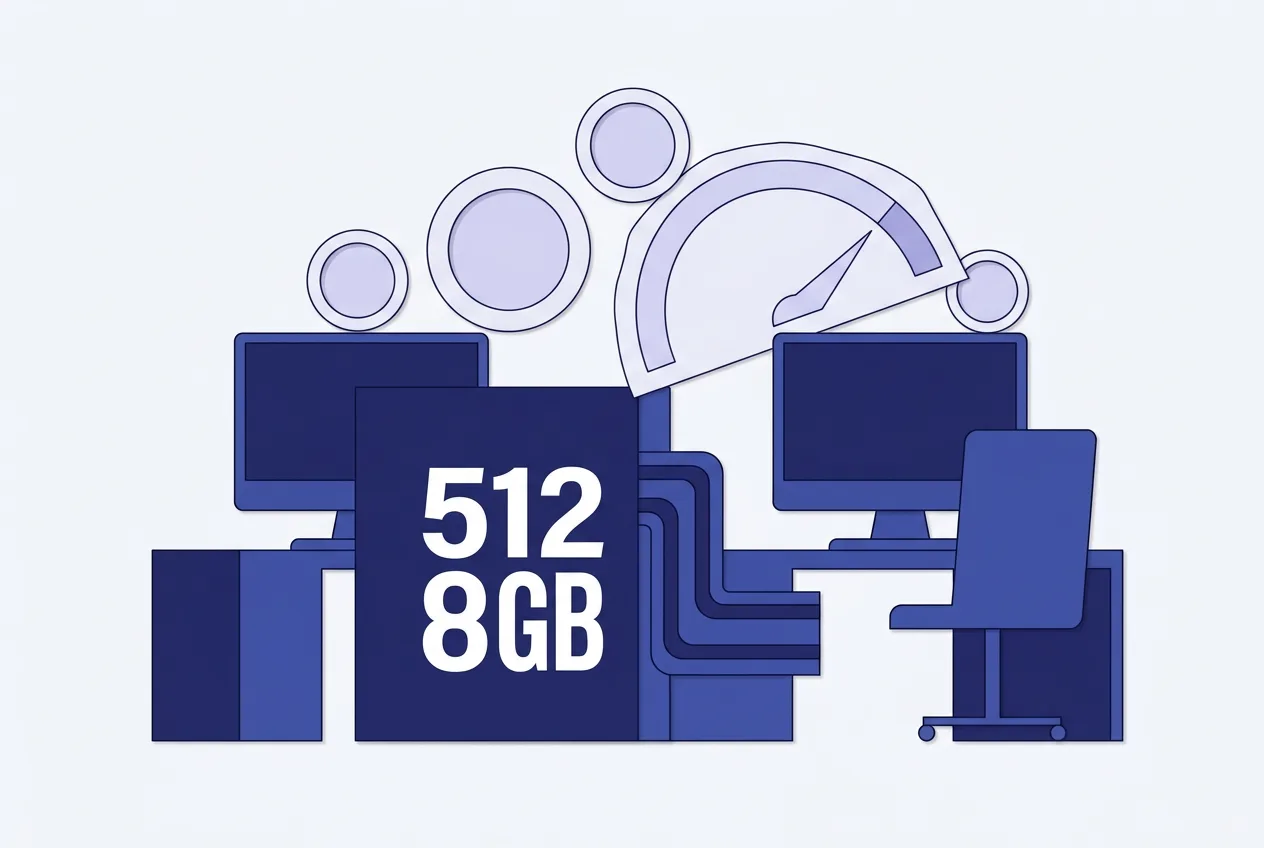
Quantized GGUF and MLX variants range from 300 GB to over 500 GB at 2–4 bit precision. Full BF16 inference adds KV cache overhead that pushes total memory past 1.6 TB on consumer hardware. Single small GPUs or typical laptops cannot accommodate the model at usable speeds.
Hosted inference through Together AI, Fireworks, Baseten and OpenRouter charges $1.25 per million input tokens, $4.25 per million output tokens and $0.15 per million cached input tokens. No additional long-context fees apply. The same rates match the closed Muse Spark 1.3 model. Weights remain free to download from Hugging Face after gated approval.
| Provider | Input / 1M | Output / 1M | Cached Input / 1M | Local Option |
|---|---|---|---|---|
| Together AI | $1.25 | $4.25 | $0.15 | Weights free |
| Fireworks | $1.25 | $4.25 | $0.15 | Weights free |
| Baseten | $1.25 | $4.25 | $0.15 | Weights free |
| OpenRouter | $1.25 | $4.25 | $0.15 | Weights free |
Organizations planning production use should budget for the revenue threshold in the license. Providers generating over $20 million annually from model-as-a-service offerings must notify Meta and sign a separate agreement. Internal research and product embedding remain exempt from that clause.
Frequently asked questions
What context length does Muse Spark Open Meta support?
The model uses a 1M-token context window suitable for ingesting entire code repositories and long video transcripts in a single request.
Can Muse Spark Open Meta run on a single consumer GPU?
No. Even the NVFP4 version requires multiple high-memory GPUs or paired M5 Ultra Mac Studios. Quantized versions still demand 300 GB or more.
How does Muse Spark Open Meta compare to closed models on tool use?
It leads Meta internal tool-use benchmarks at 89.2 on MCP-Atlas yet trails specialized closed models on certain coding suites such as Terminal-Bench.
What license restrictions apply to commercial redistribution?
The Muse Model License allows free use and redistribution with attribution but requires separate agreements for providers exceeding $20 million in annual model-as-a-service revenue.
Comments 11