
Reflection Beam Model Review: 501B Parameters Apache 2.0 License and Coding Performance
The Reflection Beam model delivers 501B parameters under Apache 2.0 with strong results on SWE-bench Verified and efficient MoE inference for coding agents.

The Reflection Beam model from Reflection AI provides a 501B-parameter open-weight MoE system released under Apache 2.0 on October 16, 2026. It targets coding and agentic workloads with 23.4B active parameters per token and a 1M-token context window.
Architecture Specifications and Deployment Requirements
Reflection Beam uses a sparse Mixture-of-Experts design with 256 routed experts and top-8 routing across 52 layers. The model ships in BF16, FP8, and NVFP4 formats along with a DFlash2 speculative decoding drafter. Total weights occupy roughly 1 TB in BF16, 500 GB in FP8, and 250 GB in NVFP4, plus KV cache overhead.
FP8 and NVFP4 checkpoints fit on a single 8-GPU H200-class node, while BF16 typically requires multi-node setups. Hosted endpoints on Together AI list $0.40 per million input tokens and $1.20 per million output tokens. OpenRouter rates sit higher at approximately $1/$3. The public beta API at platform.reflection.ai starts free.
Self-hosting options include direct Hugging Face downloads and day-0 integrations with AWS SageMaker, Google Cloud, vLLM, and SGLang. An open-source Mirror CLI agent harness accompanies the weights for immediate testing.
Benchmarks, Limitations and Practical Use Cases
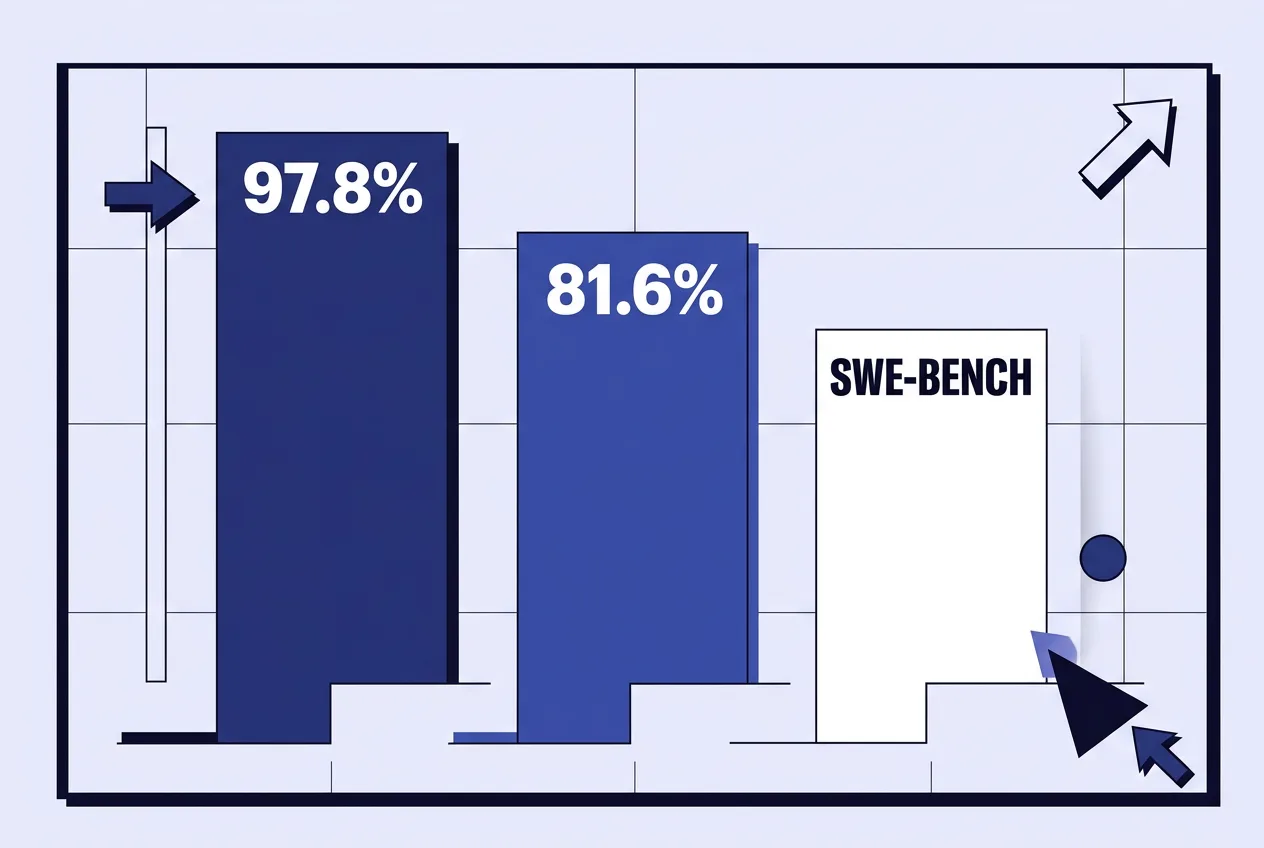
Reflection-reported scores on the model card include 80.9–81.6% on SWE-bench Verified, 80.1% on Terminal-Bench v2.1, and 65.5–66.1% on SWE-bench Pro v1. GPQA Diamond reaches 90.5–90.6% and AIME 2026 hits 97.8%. The Artificial Analysis Intelligence Index places it at 30 among non-Chinese open models.
Independent checks confirm competitive results against GLM-5.2 on several agent tasks, yet the model trails DeepSeek V4.1 Flash and Kimi K3 on harder multi-step scenarios. Fewer reasoning tokens per task provide an efficiency edge, though output quality can drop when context exceeds 500k tokens in practice.
| Model | SWE-bench Verified | Active Params | License | Approx. API Input Cost |
|---|---|---|---|---|
| Reflection Beam 1.0 | 80.9–81.6% | 23.4B | Apache 2.0 | $0.40 / 1M |
| DeepSeek V4.1 Flash | 82–84% | ~37B | Proprietary | $0.25 / 1M |
| GLM-5.2 | 78–80% | ~30B | Apache 2.0 | $0.50 / 1M |
Typical use cases center on autonomous code repair, terminal command generation, and multi-file refactoring agents. Teams report successful integration into existing vLLM pipelines within two days when using the provided FP8 weights. Quantized versions combined with speculative decoding cut latency by 30–40% on H200 hardware without measurable benchmark regression.
Limitations include English-primary training data and a June 2026 knowledge cutoff. The model shows reduced accuracy on non-English code comments and occasional instability on very long agent trajectories. Reflection supplies safety and technical reports alongside the weights, plus fine-tuning and RL recipes for further customization.
Frequently asked questions
How much VRAM does the Reflection Beam model need for inference?
NVFP4 weights require about 250 GB plus KV cache; FP8 needs roughly 500 GB. Both fit on one 8-GPU H200 node. BF16 typically needs multiple nodes.
Is the Reflection Beam model free to use commercially?
Yes. The Apache 2.0 license permits commercial use, modification, and redistribution. Hosted API access starts free during the beta period.
How does Reflection Beam compare to DeepSeek V4.1 Flash on agent tasks?
Beam scores slightly lower on the hardest multi-step benchmarks but uses fewer reasoning tokens. It offers better documented efficiency on single-node hardware.
What context length does the Reflection Beam model support?
The model accepts a 1M token context window. Practical stability remains highest below 500k tokens for complex agent workflows.
Comments 11