
Descope Envoy review 2026: AI Agent Identity Platform for Scoped Permissions
Descope Envoy provides distinct identities and scoped permissions for personal AI agents through the Poppy protocol, allowing consumer apps to accept agent sign-ins alongside human users.
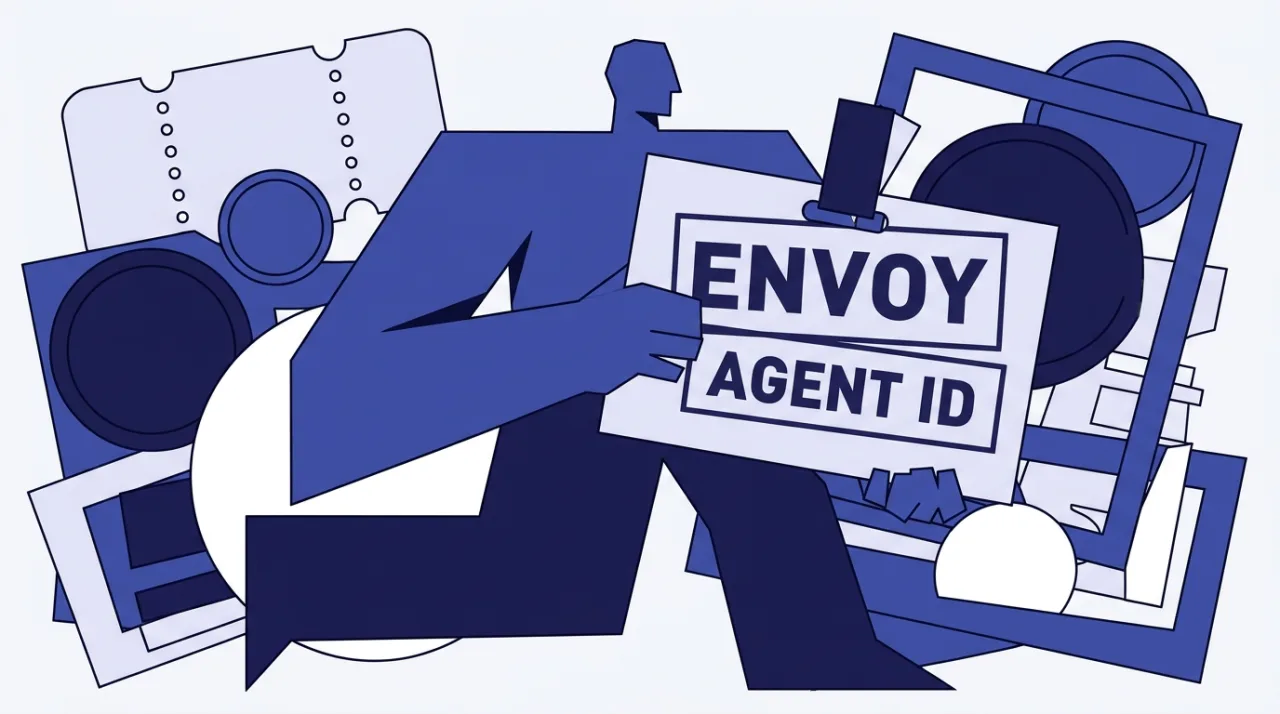
Descope Envoy launched on November 4, 2026, to let consumer apps accept personal AI agents as distinct users through delegated sign-in. It operates parallel to existing human authentication without requiring changes to the CIAM stack. Businesses gain separate tokens, sessions, and logs for agents while retaining full control over permissions and revocation.
The platform supports the Personal Agent Protocol (Poppy) 0.1 draft released in October 2026. This includes discovery mechanisms, Client ID Metadata Documents, three sign-in types, and DPoP-bound session tokens tied to each agent’s cryptographic key. Agents receive identities separate from customers, enabling independent management even when the same person operates both.
Descope Envoy review 2026: Core Capabilities for AI Agent Identity
Envoy builds on Descope’s Agentic Identity Hub, which already processes millions of monthly agent transactions across more than 1,000 MCP servers. Customer and agent remain isolated in every token and log entry. Revocation of an agent does not affect the human session, addressing scenarios where users deploy multiple agents for different tasks.
Integration requires no pre-registration for agents thanks to Client ID Metadata Documents. A zero-dependency TypeScript Poppy SDK lets agent builders connect directly. The system runs alongside current sign-in pages, so human user flows and lifecycle management stay unchanged whether Descope serves as primary CIAM or not.
Launch partners include GoFundMe, GoodRx, Linktree, You.com, Elementor, and Composio. GoFundMe requires phone-based approval for any donation action initiated by an agent, illustrating how out-of-band controls apply to high-risk operations.
Scoped Permissions and Security Limits in Agentic Commerce
Granular scoping relies on Rich Authorization Requests. A shopping agent can browse catalogs and place orders while remaining blocked from account settings or stored payment methods. Businesses set time-boxed access durations and trigger Client-Initiated Backchannel Authentication for elevated actions, sending approval requests to the customer’s device.
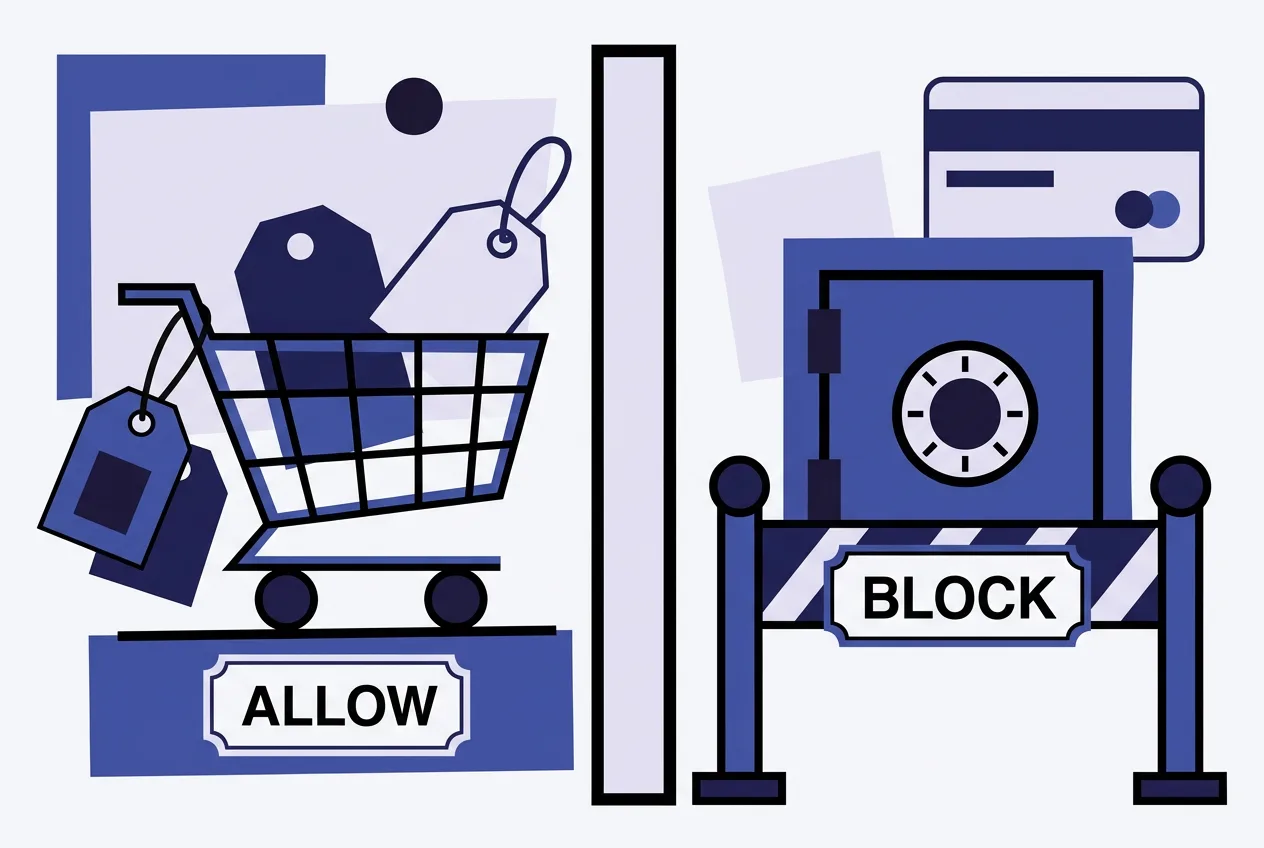
These controls emerged after incidents such as Amazon blocking Meta’s Muse in September 2026 and JPMorgan restricting outside agents in October 2026. Envoy offers a standards-based path that avoids outright blocking or agent impersonation of human users.
- Separate identity and revocation for each agent
- DPoP-bound tokens cryptographically linked to agent keys
- Support for all three Poppy sign-in types
- Independent logging that distinguishes agent activity from human sessions
| Approach | Agent Treatment | Customer Impact | Security Trade-off |
|---|---|---|---|
| Blocking agents | Prevented entirely | No change to human flows | Loses agent-driven traffic |
| Impersonation | Shares customer identity | Blurs audit trails | Higher risk of unauthorized actions |
| Descope Envoy | Distinct identity and scopes | Parallel human sessions preserved | Granular controls with revocation |
CEO Slavik Markovich stated that traditional login pages assume human users, and neither blocking nor impersonation scales for long-term agent adoption. Muse had already exceeded 5 million downloads by late September 2026, underscoring the need for controlled integration rather than exclusion.
Practical Integration Steps and Remaining Constraints
Teams begin by enabling Poppy support in their Descope tenant and mapping RAR scopes to specific business actions. Sensitive operations route through CIBA prompts to the customer’s phone. Logs automatically separate agent and human activity, simplifying compliance reviews.
Current limits include reliance on the Poppy 0.1 draft specification, which continues to evolve. Agent builders must implement the SDK correctly to maintain DPoP binding. Businesses without existing Descope infrastructure can still adopt Envoy but should test parallel flows before production rollout.
Over the coming months, design partners will expand use cases in agentic commerce. Companies evaluating the platform should map their catalog and order flows against the available RAR scopes to confirm coverage before enabling agent sign-ins.
Frequently asked questions
How does Descope Envoy separate agent and customer identities?
Each agent receives its own distinct identity with separate tokens, sessions, and log entries. Revocation of an agent leaves the customer session active and unaffected.
What permission controls does Descope Envoy provide for agents?
Rich Authorization Requests define granular scopes such as catalog browsing or order placement. Time-boxed access and Client-Initiated Backchannel Authentication add further restrictions for sensitive actions.
Does adopting Descope Envoy require changes to existing sign-in flows?
No changes are needed. Envoy runs parallel to current human authentication and supports use with or without Descope as the primary CIAM provider.
Which partners have tested Descope Envoy at launch?
GoFundMe, GoodRx, Linktree, You.com, Elementor, and Composio participated as design partners. GoFundMe requires phone approval for agent-initiated donations.
Comments 3