
Polygon Open Money Stack Review: Wallets, Stablecoin Payouts and TRON Support
Polygon Open Money Stack provides end-to-end infrastructure for stablecoin transfers, wallets and fiat ramps. It includes TRON support and automated payout tools rolled out in late 2026.
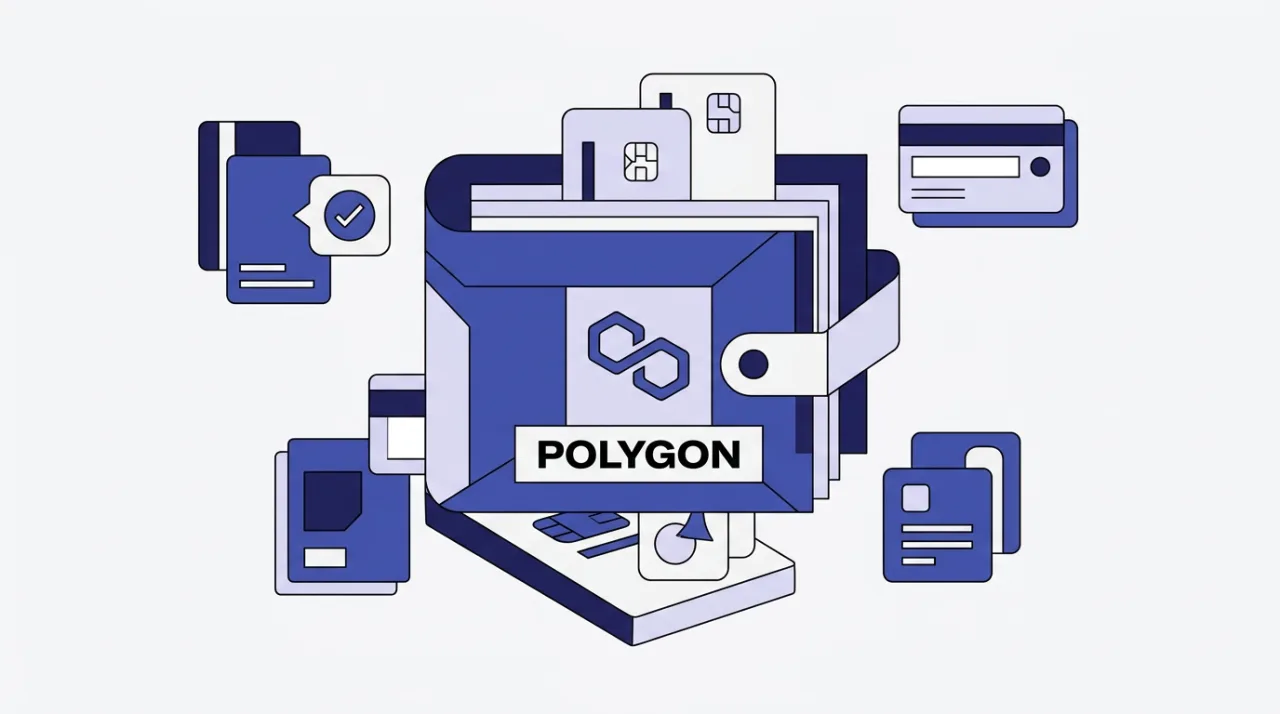
Polygon Open Money Stack delivers a unified API for moving stablecoins across wallets, chains and fiat rails. Launched in technical preview in June 2026 with full components added through October, the platform now handles USDC and USDT flows without wrapping or bridges for core paths.
Business users gain access to custodial and non-custodial wallet options, persistent deposit addresses and automated payout scheduling. The system recorded 6.4 billion transactions and 159 million unique wallet addresses on the Polygon chain by mid-2026, with average transaction costs near $0.002.
Core Features of Polygon Open Money Stack
The stack combines wallet creation, compliance checks, routing and settlement in one interface. Developers can generate unlimited embedded wallets with passkeys or Smart Sessions for enterprise-grade controls. Programmable accounts support agentic models where rules execute without repeated signatures.
Integrations already live include Revolut, Stripe and Flutterwave. Early adopters such as Tazapay, Toku, Mesh and Kira use the platform for payroll, marketplace payouts and cross-border remittances. The service targets fintechs, gig economy platforms and enterprises that need composable components rather than separate vendors for each step.
Wallets come in two main forms: OMS-managed custodial keys and non-custodial options. Persistent per-customer deposit addresses work across supported chains, and 1-click creation reduces onboarding friction. High throughput reaches 5,000 to 11 million payments per second in scaled configurations, backed by the chain’s $54 billion stablecoin transfer volume.
Stablecoin Payouts, TRON Support and Practical Limits
Automated payout runs, introduced October 12 2026, let teams set recipient scopes, budgets, execution windows and expiry dates enforced on-chain through the Sessions Module. No new signatures are required per transaction once rules are approved. Payout destinations include bank accounts via ACH, Fedwire or RTP, cards, cash at more than 50,000 U.S. retail locations and on-chain wallets.
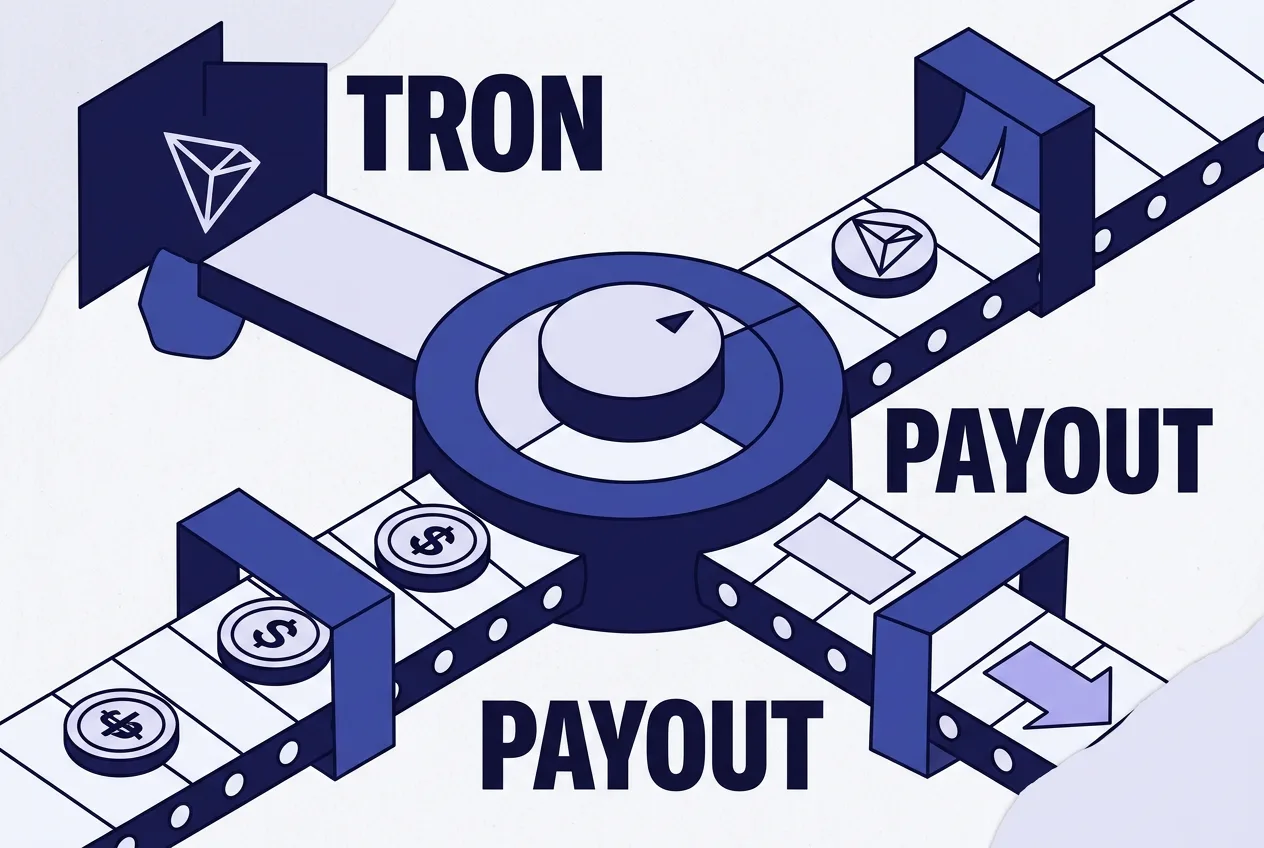
TRON support added October 8 2026 brings full USDT (TRC-20) flows, including deposits from bank, card, cash or crypto sources and payouts to the same rails. Cross-chain routing via Polygon Trails converts USDT to USDC on EVM chains when needed. The addition connects TRON’s more than $94 billion circulating USDT supply and over $30 trillion cumulative volume to U.S.-regulated rails after the Coinme acquisition closed October 14 2026.
Specific per-wallet payout caps are not publicly fixed and remain enterprise-custom through the API. Cash payouts carry a $400 per transaction ceiling in documented contexts. Network fees stay low and predictable at roughly $0.002 on average. Production access requires an application; sandbox testing is open to qualified teams. KYC and AML checks are embedded at the platform level, though users retain responsibility for their own licensing obligations.
| Feature | Details | Notes |
|---|---|---|
| Wallet types | Custodial and non-custodial | Passkeys and Smart Sessions supported |
| Stablecoin support | Native USDC and USDT | No wrapping required for core flows |
| TRON integration | USDT TRC-20 deposits and payouts | Added October 2026, first phase |
| Automated payouts | Rule-based runs via Sessions Module | Introduced October 12 2026 |
| Fiat rails | ACH, RTP, cards, cash at 50k+ locations | Global reach across 130+ countries |
Teams evaluating the stack should test payout orchestration in the sandbox before moving to production. The open architecture allows selective use of individual modules, such as wallets alone or full routing with fiat off-ramps, depending on existing vendor relationships.
Frequently asked questions
What chains does Polygon Open Money Stack support for stablecoin flows?
Core flows run on Polygon with native USDC and USDT. TRON support for USDT TRC-20 was added in October 2026, and cross-chain routing connects to other EVM networks through Polygon Trails.
How do automated payout runs work in Polygon OMS?
Rules define recipient scope, budgets and execution windows. The Sessions Module enforces these on-chain after initial approval, removing the need for per-transaction signatures.
Are there public limits on payout amounts or wallet creation?
No universal hard caps are published. Cash payouts are capped at $400 per transaction in some cases. Enterprise limits are set through the API, and production access requires an application.
Which fiat rails are available through Polygon Open Money Stack?
Bank transfers via ACH, Fedwire, RTP and IBAN, card payments, and cash at over 50,000 U.S. locations are supported. Global coverage reaches 130 countries through various licensed partners.
Comments 4