
Liquid AI LFM2.5 review: LFM2.5-24B-A2B Local Performance, Context Limits and Agent Tool Use
Liquid AI LFM2.5 review examines the open-weight LFM2.5-24B-A2B for local agent workloads and compares it with the hosted d1-ultra decision model.
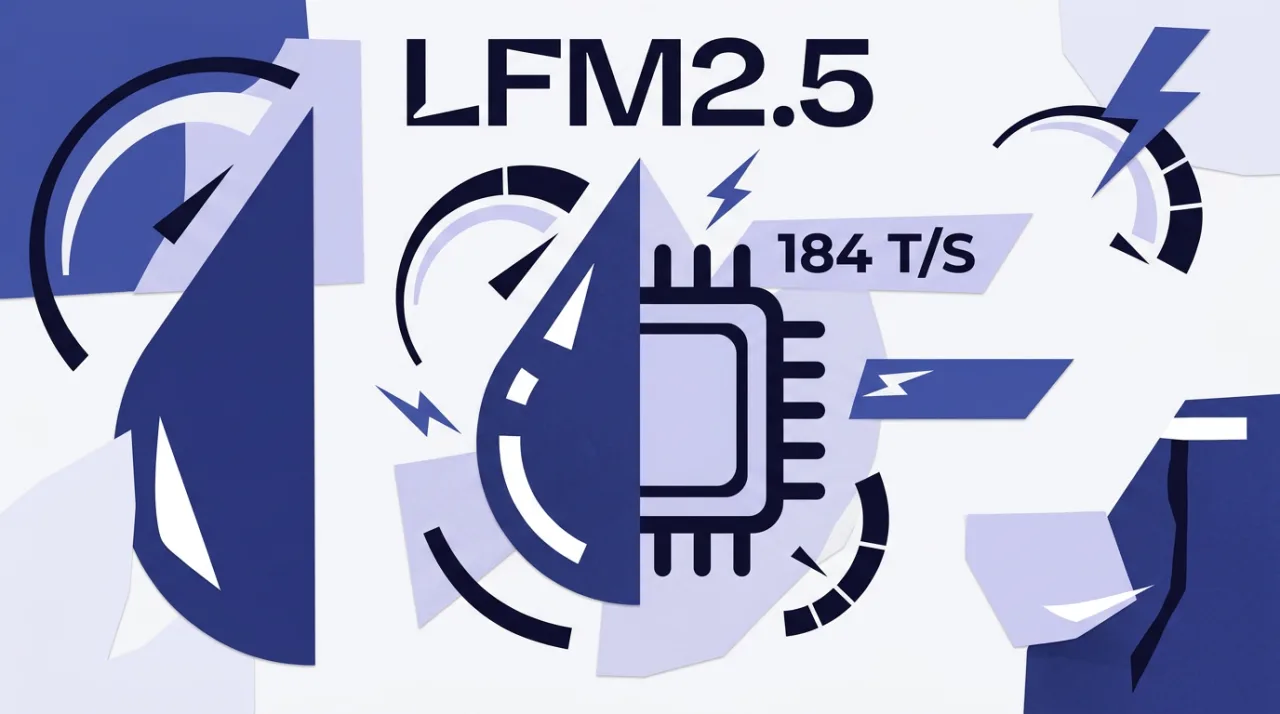
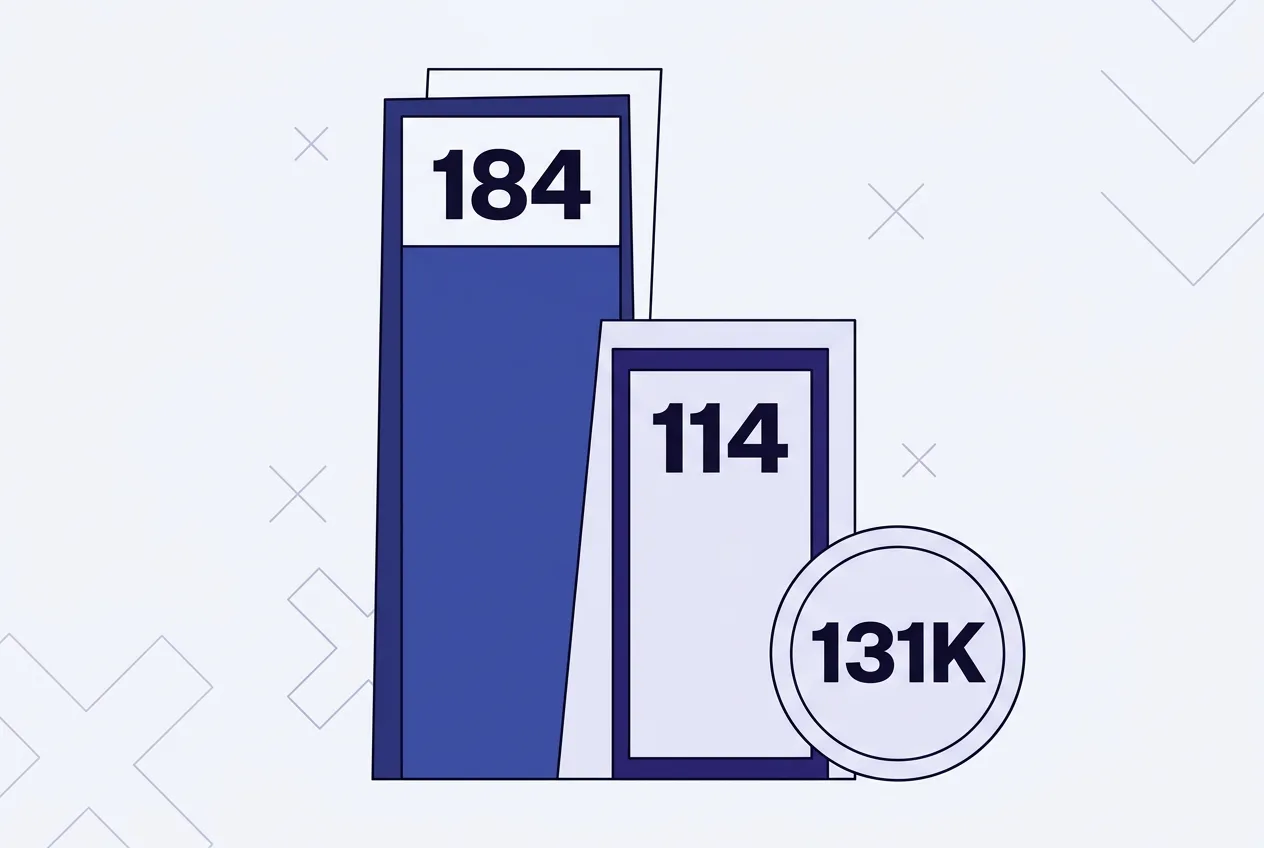
Liquid AI released the LFM2.5-24B-A2B on October 13, 2026 as an open-weight MoE model optimized for on-device reasoning and tool use. The 24B-parameter model activates roughly 2 to 2.45 billion parameters per token through 64 experts with top-4 routing. It ships with a 131K-token context window and explicit chain-of-thought output in every response.
The model was post-trained with supervised fine-tuning, distillation, and agentic reinforcement learning in harnesses including OpenClaw and Hermes Agent. This training produces reliable multi-step tool calling without external scaffolding. A base checkpoint is also available for further fine-tuning.
Liquid AI LFM2.5 review: Local speed and memory footprint
On Apple M5 Max hardware the model reaches 184 tokens per second in Q4_K_M quantization using MLX. The same weights deliver 114 tokens per second on an AMD Ryzen AI Max+ 395. Memory usage stays near 15–16 GB even at 128K context, the lowest footprint among comparable mixture-of-experts models tested by Liquid.
High-concurrency setups on a single NVIDIA B300 with SGLang exceed 21,000 output tokens per second. GGUF, MLX, ONNX, and FP8 builds are published on Hugging Face. Runtimes supported include Transformers, llama.cpp, vLLM, and ONNX Runtime. Users running long agent trajectories should reserve tokens inside the chat template for the mandatory <think> blocks.
Benchmarks reported by Liquid place the model ahead on five of eight agentic and tool-use suites. It scores 27.69 on AutomationBench and 48.09 on LiveClaw, both well above the next-best open models. Instruction-following results are also strongest: 96.75 on IFEval and 84.38 on Multi-IF. Knowledge and coding tasks show weaker results, with GPQA Diamond at 74.42 and SWE-Bench Verified at 51.00. Liquid advises retrieval augmentation for knowledge-heavy work.
Context limits, agent capabilities, and d1-ultra comparison
The 131K context supports extended documents and multi-turn agent sessions. Tool calling was specifically reinforced through OpenClaw and Pi harnesses, producing stable function selection across banking and automation scenarios. The LFM Open License v1.0 permits commercial use subject to stated restrictions; terms should be reviewed before deployment.
Liquid also released d1-ultra on October 15, 2026 as a proprietary multimodal decision model. It returns calibrated probabilities for classification, routing, and scoring tasks without token generation. The model supports 44 languages and processes images as input patches. Pricing is $0.042 per million input tokens with no output charge.
| Model | Params / Type | Context | Local Run | Tool Use Strength | Price |
|---|---|---|---|---|---|
| LFM2.5-24B-A2B | 24B MoE open | 131K | Yes (15–16 GB Q4) | High on agent benchmarks | Free download |
| d1-ultra | Undisclosed multimodal | ~32K | No | Top on Decision Index | $0.042 / M input |
Independent third-party agent tests remain limited as of October 19, 2026. Teams needing on-device multi-step agents should test LFM2.5-24B-A2B first, while classification or visual inspection workloads may favor the hosted d1-ultra for its calibration accuracy.
Frequently asked questions
What context length does LFM2.5-24B-A2B support?
The model uses a native 131K-token context window. This covers long documents and extended agent trajectories while staying under 16 GB at Q4 quantization.
How fast does LFM2.5-24B-A2B run locally?
Liquid reports 184 tokens per second on Apple M5 Max and 114 tokens per second on AMD Ryzen AI Max+ 395 hardware using standard quantized builds.
Is d1-ultra available for local deployment?
No. d1-ultra runs only through the Liquid API and returns probability scores rather than generated text.
Which benchmarks show the strongest results for LFM2.5-24B-A2B?
The model leads on AutomationBench, LiveClaw, ToolSandbox, and all three instruction-following tests according to Liquid’s vLLM evaluations.
Comments 11