
Zano Wallet Review 2026: Full Node Requirements, Fees and Monero Comparison
Zano wallet options include official desktop with staking and a new Lite version. Review details node specs, transaction costs and privacy differences from Monero.

Zano wallet review shows a privacy coin launched in 2019 that enforces ring signatures of size 16, stealth addresses and Bulletproofs+ by default. Current circulating supply stands at 15.47 million ZANO with a market cap near 63 million dollars and a price of 4.07 dollars as of October 2026.
Users can run the official desktop wallet for full-node staking or switch to the Lite desktop beta released in May 2026 that connects to remote nodes. Mobile options exist for iOS and Android, while third-party support includes Edge, Bitcoin.com and Unstoppable wallets. Cake Wallet is removing Zano integration after the September 2026 rollback.
Zano Full Node Requirements and Staking Setup
Staking demands a modern CPU with at least four cores, an SSD with 200 GB free space and 32 GB RAM according to official documentation. Smaller setups work for basic daemon operation but increase risks of latency or out-of-memory errors during peak load. The blockchain database currently occupies 12.5 to 35 GB and continues to grow with transaction volume.
Users enable staking through the official desktop wallet toggle or via CLI commands with zanod and simplewallet using the --do-pos-mining flag. The node must remain online with stable internet; operators often route traffic through VPN or priority nodes for added privacy. Docker images simplify deployment for those running production environments.
Hybrid consensus combines ProgPowZ proof-of-work mining with Zarcanum private proof-of-stake. Stakers receive rewards from the fixed 1 ZANO per block emission while 100 percent of transaction fees are burned. Post-Hard Fork 6 recovery continues after a 30-day rollback that removed 36.9 million counterfeit tokens created during a Gateway vulnerability.
Zano Transaction Fees and Wallet Options
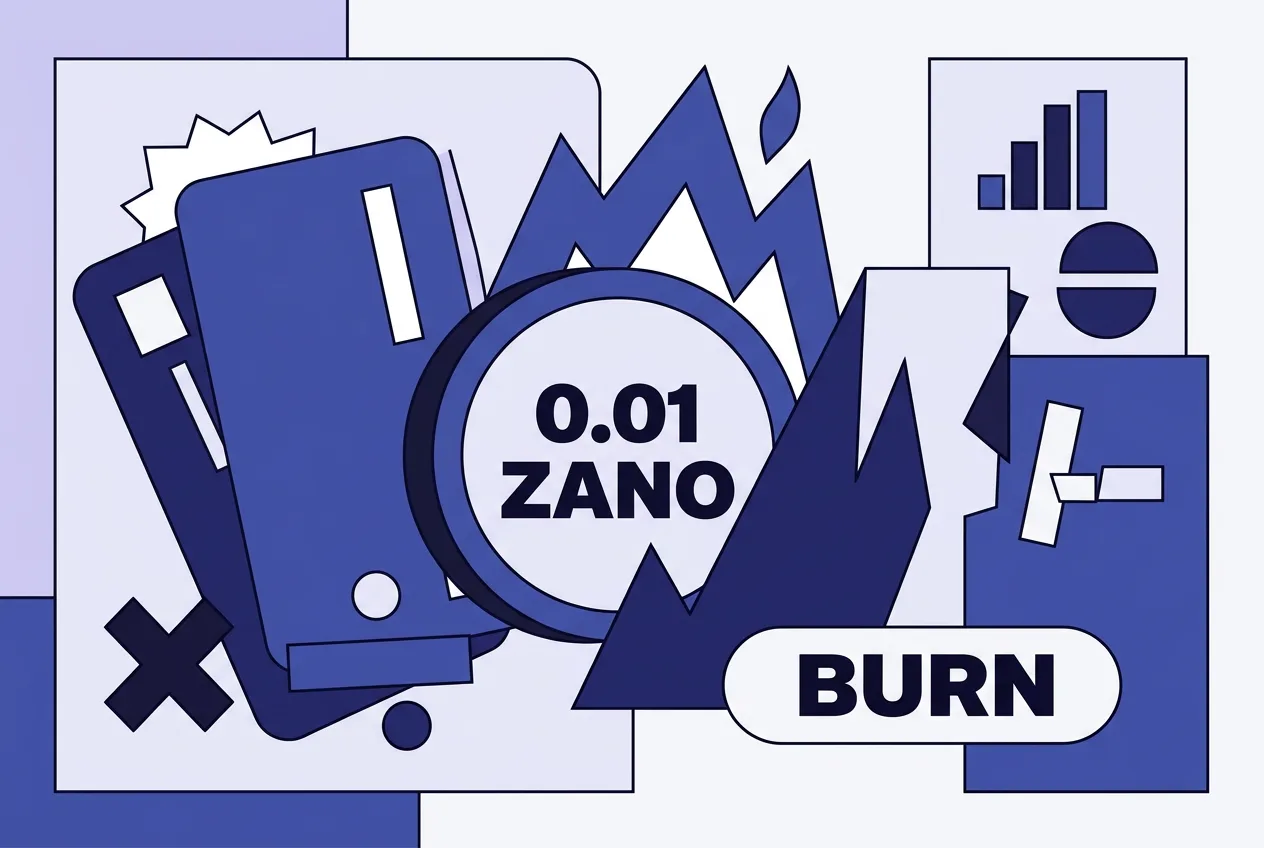
The protocol sets a flat fee of 0.01 ZANO per transaction regardless of size or asset type. All fees are burned, creating potential deflationary pressure when daily volume exceeds the 1440 ZANO block reward. Third-party wallets such as Edge list Automatic, Slow, Medium, Fast and Fastest options with real-world costs typically between 0.01 and 0.05 dollars depending on network conditions.
Exchange withdrawal fees range from 0.025 to 0.3 ZANO. Addresses begin with ZxD and users can register human-readable aliases. The September rollback and subsequent exchange pauses have delayed full service restoration on platforms including MEXC and Hotcoin.
Gateway Addresses introduced in Hard Fork 6 remain disabled pending third-party audit. Planned features include ZEL smart-contract execution and the Zenith pure proof-of-stake upgrade targeting 15-20 second blocks with hidden amounts.
| Feature | Zano | Monero |
|---|---|---|
| Privacy defaults | Ring size 16, Bulletproofs+, stealth addresses | Ring signatures, RingCT, stealth addresses |
| Consensus | Hybrid PoW/PoS with private staking | Pure PoW with tail emission |
| Native assets | Confidential Assets and planned EVM layer | None |
| Supply mechanics | Fixed 1 ZANO/block + 100% fee burn | Tail emission, no fee burn |
| Wallet sync | Full node or Lite remote option | Full node or remote node |
The lead developer of Zano previously contributed to the CryptoNote protocol that underpins Monero. Zano adds native support for private tokens and cross-chain swaps while both projects face similar exchange delisting pressures due to regulatory scrutiny of privacy features.
Frequently asked questions
What hardware meets Zano full node staking requirements?
Official guidance lists a 4-core CPU, 200 GB SSD free space and 32 GB RAM. Lower specifications run the daemon but may encounter latency during high activity periods.
How much does a Zano transaction cost?
The network charges a fixed 0.01 ZANO fee per transaction. Third-party wallets convert this to roughly 0.01 to 0.05 dollars depending on price and selected speed tier.
Does Zano offer the same privacy level as Monero?
Both enforce ring signatures and hidden amounts by default. Zano adds Confidential Assets and private proof-of-stake while maintaining a ring size of 16 identical to Monero.
Why did Cake Wallet drop Zano support?
Cake Wallet cited ongoing maintenance from the September 2026 blockchain rollback and Hard Fork 6 changes as the reason for phasing out integration.
Comments 9