
DeepSeek V4.1 Flash 1017 Review: API Pricing, Context Limits, Agent Performance and Comparison with Gemini 4 Argon
DeepSeek V4.1 Flash 1017 delivers 1M-token context and competitive agent benchmarks at $0.15 per million input tokens. This review covers pricing, limits and direct comparison with Gemini 4 Argon.
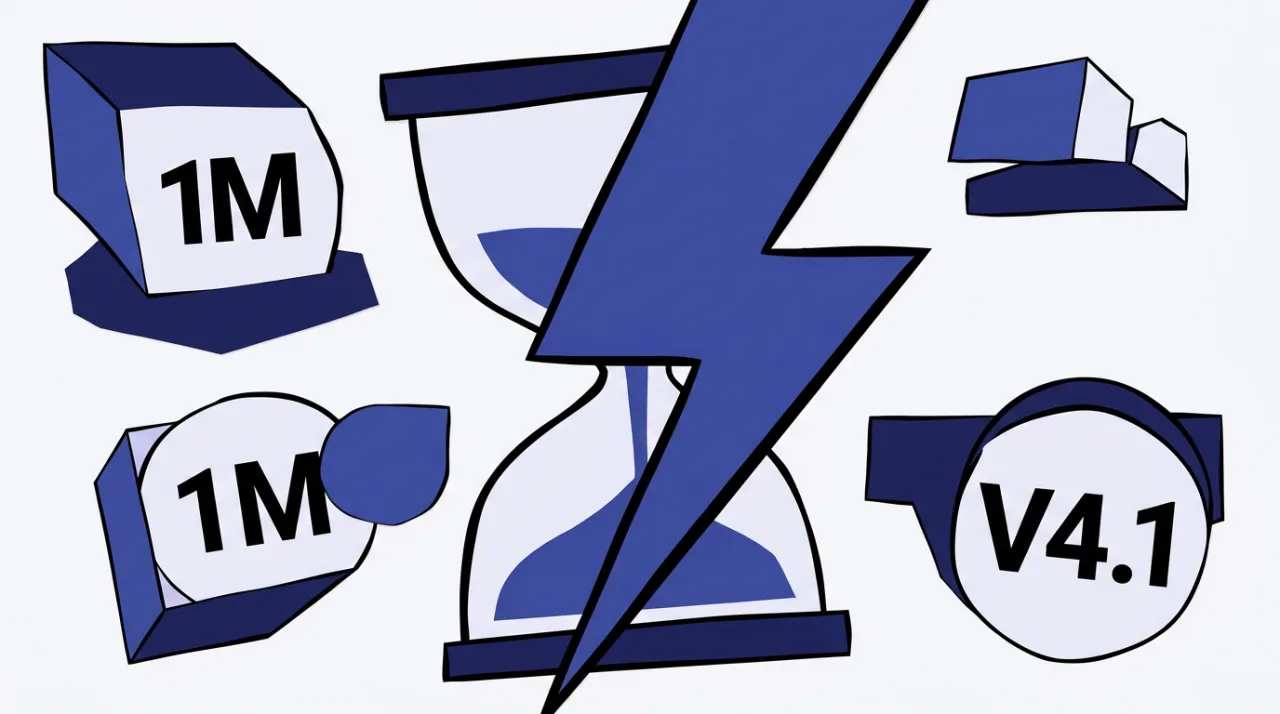
DeepSeek V4.1 Flash 1017, released October 17 2026, updates the prior Flash checkpoint with the same 552B backbone and improved agentic scores. It runs under the model ID deepseek-flash on the DeepSeek API and ships as open weights under MIT license on Hugging Face. The update keeps pricing and core architecture unchanged while lifting results on coding and automation tasks.
DeepSeek V4.1 Flash 1017 API Pricing and Context Limits
The model accepts a 1M-token context window shared across input and output. Maximum output length reaches 384K tokens through the API, with some listings citing up to 393K. Input supports text and images; output remains text only. Tool calling, structured JSON responses and controllable reasoning effort on a low-to-max or 1–100 scale are all available.
Off-peak pricing sits at $0.15 per million input tokens and $0.60 per million output tokens on cache misses. Cached input drops to $0.003 per million. Search and Fetch API calls cost $0.75 per 1,000 successful requests. Peak rates run roughly twice the off-peak figures. These rates match the previous Flash version exactly.
- 1M context window shared input/output
- 384K max output tokens via API
- Native image input, text output
- Tool calling and JSON mode supported
- Reasoning effort control (low/high/max or 1–100)
Agent Performance and Direct Comparison with Gemini 4 Argon
DeepSeek reports gains of 2–11.1 points across eleven benchmarks versus the prior checkpoint. DeepSWE v1.1 reaches 77.0 percent, Terminal-Bench 4.0 hits 42.3 percent, and Automation-Bench v1.0.6 scores 60.5 percent. Agents’ Last Exam lands at 35.4 percent and Apex Bench v1.1 at 72.1 percent. These numbers come from vendor evaluations and remain subject to independent verification.
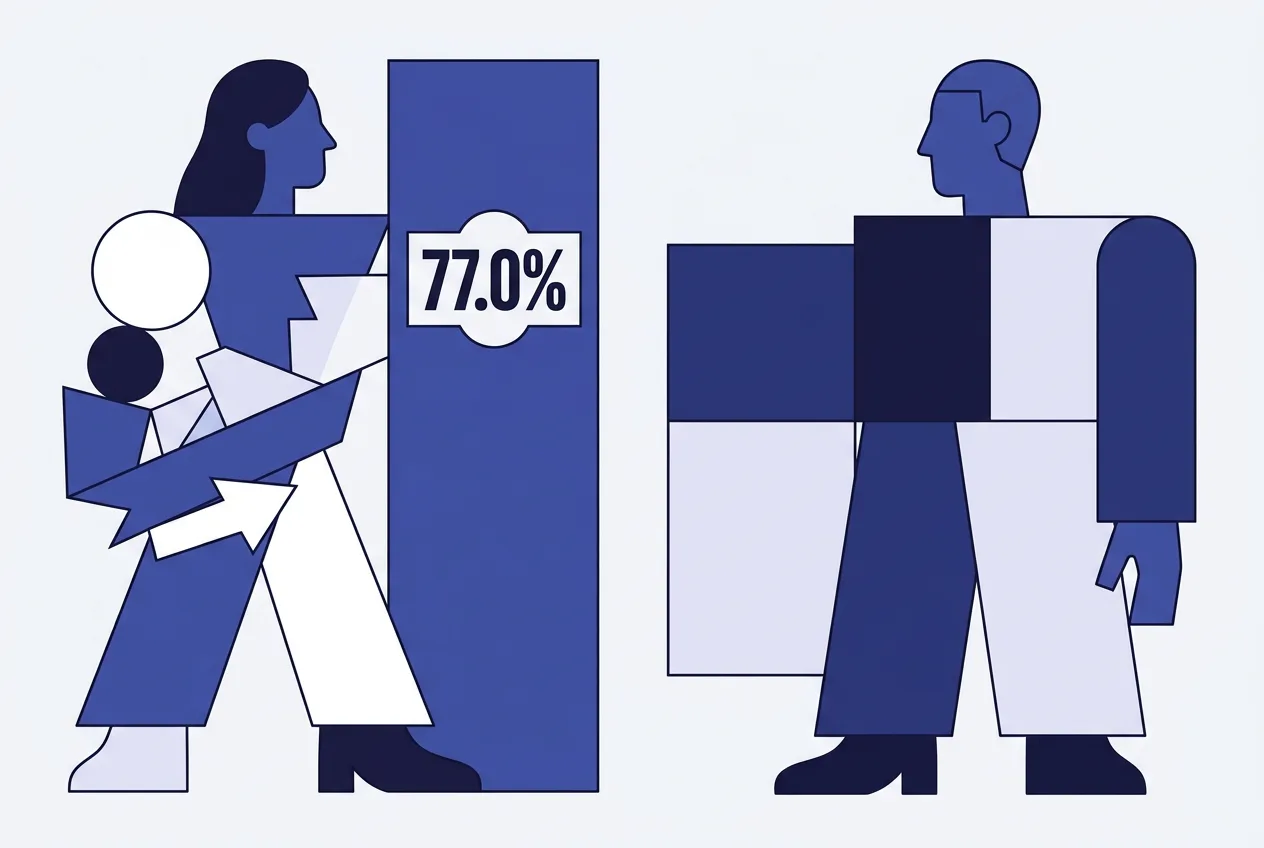
Gemini 4 Argon, released late September 2026, uses a larger sparse MoE design and lists 1M unified context with longer single-response output possible. Its introductory pricing through November 30 2026 runs $2 per million input and $10 per million output, with cached input at $0.10. After that date rates double. Gemini supports additional modalities including video, audio and PDF, plus stronger long-context retrieval on tasks such as GraphWalks.
| Metric | DeepSeek V4.1 Flash 1017 | Gemini 4 Argon |
|---|---|---|
| Input price per 1M tokens | $0.15 | $2 (intro) |
| Output price per 1M tokens | $0.60 | $10 (intro) |
| Max context | 1M | 1M |
| DeepSWE v1.1 | 77.0% | 77.9% (Google eval) |
| Modalities | Text + image | Text, image, video, audio, PDF |
DeepSeek V4.1 Flash 1017 costs roughly ten to twenty times less per token while matching or exceeding Gemini on several agentic coding benchmarks. Gemini leads on broader knowledge and long-context enterprise tasks and offers more input types. Users running high-volume agent workflows often choose DeepSeek for cost control and switch to Gemini when output quality on complex multimodal prompts matters more. Monitor independent leaderboards as new evaluations for the 1017 checkpoint appear. See also the Google Gemini API Pricing 2026 guide for current Gemini rate details after the introductory period.
Frequently asked questions
What is the context window size of DeepSeek V4.1 Flash 1017?
The model supports a 1M-token context window shared between input and output. Maximum output length reaches 384K tokens through the official API.
How much does DeepSeek V4.1 Flash 1017 cost per million tokens?
Off-peak rates are $0.15 per million input tokens and $0.60 per million output tokens. Cached input costs $0.003 per million. Peak rates are approximately double.
Does DeepSeek V4.1 Flash 1017 support tool calling?
Yes. The model includes tool calling, structured JSON output and adjustable reasoning effort levels.
How does DeepSeek V4.1 Flash 1017 compare to Gemini 4 Argon on cost?
DeepSeek charges roughly ten to twenty times less per token. Gemini lists $2/$10 during its introductory period and doubles after November 30 2026.
Comments 15