
ServiceNow Autonomous CRM Engine Review 2026: Discovery, Deployment Timeline, Pricing and Legacy Migration Limits
ServiceNow Autonomous CRM Engine uses AI to map legacy CRM processes and deploy on ServiceNow in weeks rather than months. Review examines the four-stage process, pricing approach, and remaining constraints.
ServiceNow Autonomous CRM Engine targets the core pain points of legacy CRM migrations by automating discovery of actual usage patterns instead of relying on documentation. Announced on November 12, 2026, the tool maps workflows, custom objects, and integrations from platforms such as Salesforce into a graph database, then applies AI to redesign processes according to ServiceNow best practices. Early controlled availability limits broad testing, but initial adopters report consolidations completed in roughly one month.
Discovery and Four-Stage Deployment Timeline
The engine connects via metadata APIs to extract processes, scripts, and configurations. It reconstructs real usage flows, such as sales approvals or escalations, and flags differences between documented and actual operations. This step reduces discovery from weeks or months to days for targeted areas like product-line sales processes.
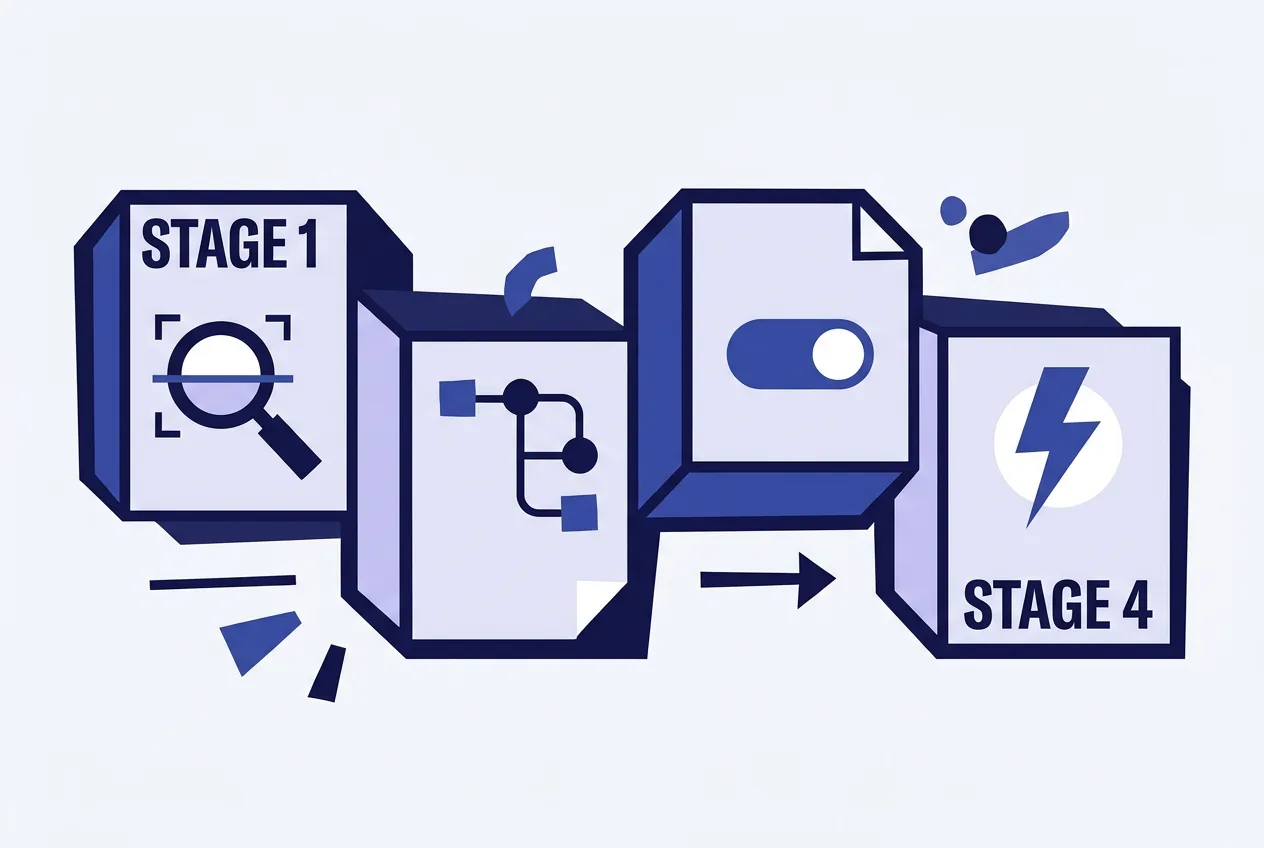
The process follows four sequential stages. Discovery feeds directly into Design, where AI proposes ServiceNow-native workflows. Approved designs move to Build and deploy. Post-launch, continuous monitoring detects drift or misconfigurations before they generate support tickets. ServiceNow states this sequence can compress typical multi-year migrations into weeks for selected modules, though full enterprise rollouts still require organizational decisions on data governance and external integrations.
Early examples include Datacom and Xactly, which used the engine to consolidate sales, service, and delivery operations. The tool builds on the September 2026 Sweep acquisition for its Build Agent capabilities. Controlled availability restricts access while expanded features are scheduled for 2027.
Pricing Approach and Legacy Migration Limits
No public pricing exists for the Autonomous CRM Engine itself. ServiceNow platform access remains quote-based, with per-user or subscription-unit models across Foundation, Advanced, and Prime tiers. AI consumption is metered separately. Indicative fulfiller rates range from $100 to $185 per user per month depending on volume and tier. The broader ServiceNow CRM business exceeded $2 billion ACV in recent periods, with net-new CRM ACV tripling year-over-year in Q3 2026.
The engine explicitly avoids lift-and-shift tactics that preserve inefficient legacy processes. It requires enterprises to accept redesigned workflows. Remaining limits include the need for human decisions on compliance rules, external system connections, and data ownership. Gartner estimates that unresolved CRM constraints could restrict customer-experience improvements by about 50 percent by 2029. Controlled availability currently prevents independent benchmark testing across varied industry scenarios.
| Stage | Duration Impact | Key Output |
|---|---|---|
| Discover | Days instead of weeks | Usage graph and discrepancy report |
| Design | Weeks | ServiceNow best-practice recommendations |
| Build/Deploy | Weeks to months | Configured CRM instance |
| Monitor | Ongoing | Drift alerts and preventive fixes |
Enterprises evaluating this option should compare it against continued investment in existing Salesforce instances or alternative platforms that also offer AI-assisted migration tooling. Practical next steps include requesting a controlled-availability pilot focused on one high-volume process to measure actual timeline compression against internal baselines.
Frequently asked questions
How long does discovery take with the ServiceNow Autonomous CRM Engine?
Discovery collapses into days for defined processes such as sales approvals by product line. The engine uses metadata APIs and a graph database to map actual usage rather than documented flows.
Is pricing for the Autonomous CRM Engine publicly available?
No public pricing has been released. ServiceNow platform access stays quote-based, with AI usage metered separately from standard per-user or subscription tiers.
What legacy systems does the engine target first?
Initial focus is on Salesforce migrations, with plans to expand. It redesigns processes instead of performing lift-and-shift transfers.
What limits remain after deployment?
The engine does not remove the need for decisions on data governance, external integrations, or compliance rules. Controlled availability also restricts broad independent testing.
Comments
No comments yet. Be the first!