
MiniMax M3.1 Flash Review: Token Pricing, Speed, Context Window and Comparison with DeepSeek V4.1 Flash
MiniMax M3.1 Flash delivers 1 million token context and $0.15 per million input token pricing for agentic and coding workloads, with performance that trades off against DeepSeek V4.1 Flash on specific benchmarks.
MiniMax released the M3.1 Flash model on October 19, 2026, as a proprietary multimodal system aimed at agentic tasks, coding, computer use, and long-context processing. The model carries a 1 million token context window and flat API rates of $0.15 per million input tokens and $0.60 per million output tokens. These rates sit at roughly half the cost of the prior M3 version and produce about 70 percent lower task expenses in agent workloads.
Everyday inference reaches median speeds above 170 tokens per second on the MiniMax API, with Artificial Analysis recording 123 output tokens per second. Time to first token averages near one second. Output lengths tend toward verbosity, which increases total token spend on some tasks.
MiniMax M3.1 Flash Pricing and Context Limits
The API charges a flat $0.15 per million input tokens and $0.60 per million output tokens, with cached inputs discounted to $0.015 per million. Providers such as OpenCode have offered limited free tiers for early testing. Maximum output length varies by endpoint between 128K and 512K tokens. The 1 million token context accepts text and image inputs, with some endpoints supporting video as well.
These rates match the base pricing of DeepSeek V4.1 Flash on off-peak hours, though DeepSeek applies peak-hour doubling and a lower cache rate near $0.003. For high-volume agent runs, the MiniMax cache discount reduces effective cost when prompts repeat across sessions. Users should test cache hit rates on their specific workloads before committing to volume commitments.
Practical limits appear in output length caps and the absence of fine-tuning options at launch. The model runs live on the MiniMax API, M Plan subscriptions, and the MiniMax Code desktop application. Open weights are scheduled for release on October 23, 2026.
Benchmarks and Comparison with DeepSeek V4.1 Flash
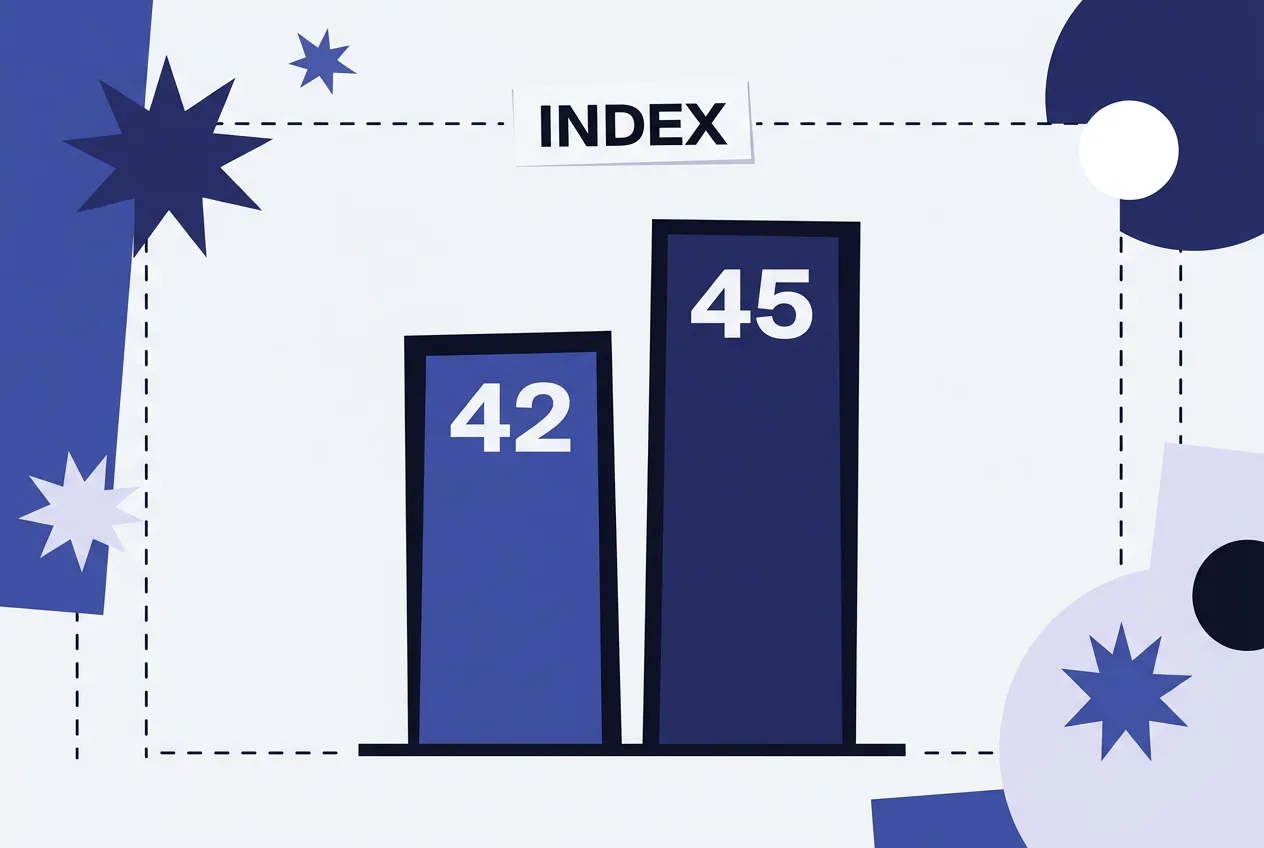
Artificial Analysis assigns MiniMax M3.1 Flash an Intelligence Index score of 42, up from 29 on the prior M3 and level with GLM-5.3-Flash. DeepSeek V4.1 Flash 1017 reaches 45 on the same index. MiniMax scores higher on Humanity’s Last Exam at 48 percent and on Automation-Bench at 62.2, while DeepSeek leads on DeepSWE v1.1 at 77.0 and Terminal-Bench.
OSWorld V2 and BankerToolBench favor MiniMax among Chinese models at 61.7 and 76.2 respectively. One independent eval flagged a 93 percent hallucination rate tied to the model’s tendency to attempt every question. Average task cost lands near $0.22 for MiniMax versus $0.26 for DeepSeek on comparable agent runs, driven by lower output token counts.
| Metric | MiniMax M3.1 Flash | DeepSeek V4.1 Flash 1017 |
|---|---|---|
| Intelligence Index | 42 | 45 |
| Automation-Bench | 62.2 | 60.5 |
| DeepSWE v1.1 | 73.7 | 77.0 |
| Output speed (TPS) | 123–170 | 222–231 |
| Base input price | $0.15/M | $0.15/M |
| Typical task cost | $0.22 | $0.26 |
DeepSeek offers open weights under MIT license and higher peak speeds in some measurements. MiniMax shows stronger results on business automation benchmarks and lower per-task spend when output remains concise. Workload testing remains necessary; neither model replaces dedicated evaluation on production agent flows. A separate DeepSeek V4.1 Flash review covers its integration options and Gemini comparisons in more detail.
Frequently asked questions
What is the context window size of MiniMax M3.1 Flash?
The model supports a 1 million token context window for text and image inputs, with output lengths capped between 128K and 512K tokens depending on the provider endpoint.
How does MiniMax M3.1 Flash pricing compare to DeepSeek V4.1 Flash?
Both start at $0.15 per million input tokens and $0.60 per million output tokens on base tiers. DeepSeek adds peak-hour rate doubling and a lower cache price, while MiniMax keeps flat rates with a 90 percent cache discount.
What benchmarks show MiniMax M3.1 Flash ahead of DeepSeek?
MiniMax leads on Automation-Bench at 62.2 and certain reasoning tests such as Humanity’s Last Exam. It also records lower average task costs around $0.22 compared with $0.26 on DeepSeek.
When will MiniMax M3.1 Flash open weights become available?
MiniMax plans to release open weights on October 23, 2026. The model currently runs on the MiniMax API, M Plan, and the MiniMax Code desktop app.
Comments 1